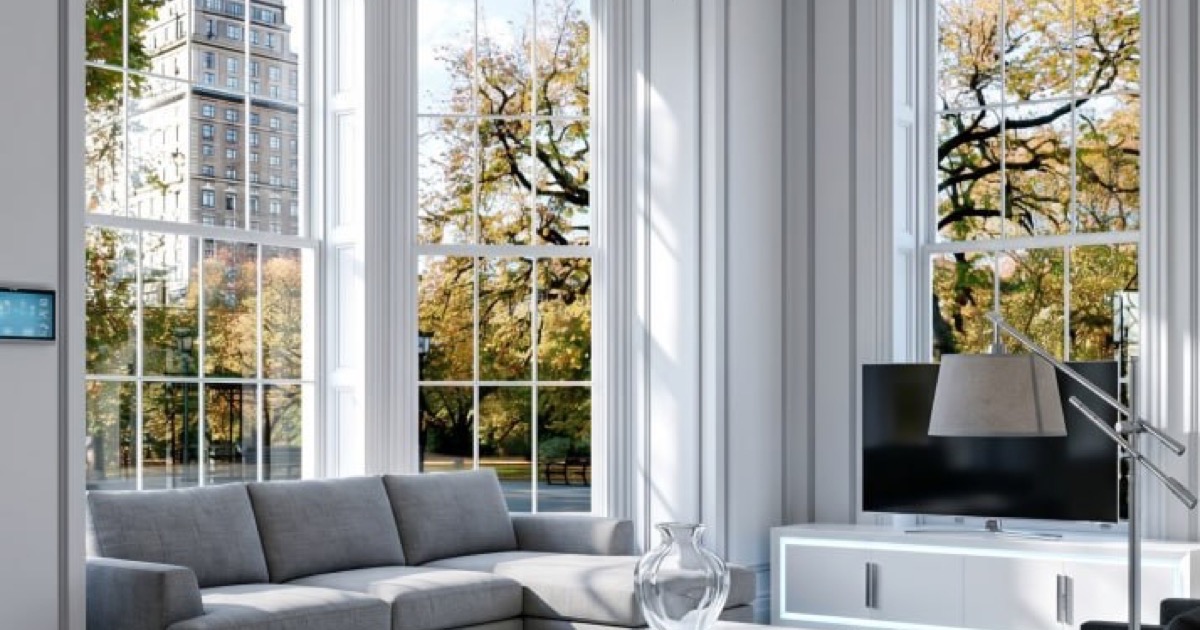
Small rooms are the great equaliser of interior design. Everyone has one — a cramped bedroom, a boxy bathroom, a narrow hallway, a pocket-sized home office. And everyone wants the same thing: to make it feel bigger without knocking down walls.
The good news? Most of what makes a room feel small isn't the room itself. It's the choices we make inside it. Dark walls, heavy furniture, poor lighting, clutter, and visual breaks all shrink a space psychologically. Change those choices, and the room feels bigger — even though the square footage hasn't changed.
AI interior design is uniquely suited to small room problems. Because you can generate multiple variations in minutes, you can test every space-expanding technique without moving a single piece of furniture.
The Psychology of Small Spaces
Before we get to the techniques, understand why rooms feel small. It's not just about square footage.
Visual weight
Dark colours, heavy furniture, and busy patterns absorb light and attention. Light colours, slim furniture, and simple patterns reflect light and expand the visual field.
Sightlines
When your eye hits a wall, the room feels like it ends there. When your eye travels through a space, the room feels larger.
Clutter
Every object is a visual decision. Too many objects = cognitive overload = the room feels cramped. Clear surfaces make a room feel spacious.
Lighting
Dark rooms feel smaller. Bright, even, layered lighting makes a room feel open and airy. Natural light is the most powerful space-expander of all.
Scale
Furniture that's too big for the room makes the room feel tiny. Furniture that's proportional to the space makes it feel balanced. The right scale is about 2/3 of what you think you need.
Fields to Copy for a Bigger-Feeling Room
In the Aspire app, choose Describe Manually and paste space-maximising fields, then generate two versions and compare. Good starting points:
- Walls: warm white or pale neutral walls with one low-contrast feature wall
- Furniture: low-profile sofa or bed, raised legs, wall-mounted storage where possible
- Lighting: layered lighting with wall washers and a warm floor lamp, no heavy pendant drop
- Flooring: continuous flooring tone running towards the longest sightline
- Extras: large mirror opposite the main window, uncluttered surfaces, curtains hung high and wide
15 Techniques to Make a Small Room Look Bigger with AI
1Light Walls, Dark Floor
The classic space-expanding combination. Light walls reflect light and push the walls outward visually. A darker floor anchors the room and creates depth. The contrast creates dimension.
How to test with AI:
Upload your room photo. Generate two versions:
- • Version A: "Small bedroom with light cream walls, walnut flooring, minimal furniture"
- • Version B: "Small bedroom with charcoal walls, light oak flooring, minimal furniture"
Pro tip: Don't go pure white. Off-white, cream, or very pale grey has more warmth and depth than clinical white.
2The Mirror Trick
Mirrors reflect light and create the illusion of depth. A large mirror on a wall opposite a window effectively doubles the light source and creates a visual extension of the room.
How to test with AI:
Upload your room photo. Generate:
- • "Small living room with large round mirror on the wall opposite the window, reflecting natural light"
- • "Small living room with art on the wall opposite the window"
Pro tip: One large mirror is better than several small ones. A single 1.2m mirror has more impact than three 40cm mirrors.
3Wall-Mounted Everything
Floor space is precious in small rooms. Every piece of furniture that sits on the floor eats visual space. Wall-mounted furniture — shelves, desks, TVs, lighting — frees up the floor and creates sightlines underneath.
How to test with AI:
Generate two versions:
- • "Small home office with freestanding desk, bookshelf, and floor lamp"
- • "Small home office with wall-mounted desk, floating shelves, and wall sconces"
Pro tip: Wall-mounted storage is particularly powerful in small bedrooms. Replace a freestanding wardrobe with a wall-mounted clothing system.
4Low Furniture, High Ceilings
Low-profile furniture makes ceilings feel higher. A sofa with a low back, a bed with a low frame, a coffee table that's close to the floor — all create vertical space above the furniture line.
How to test with AI:
Generate:
- • "Small living room with low-profile sofa, low coffee table, floor lamp"
- • "Small living room with high-back sofa, tall coffee table, standard lamp"
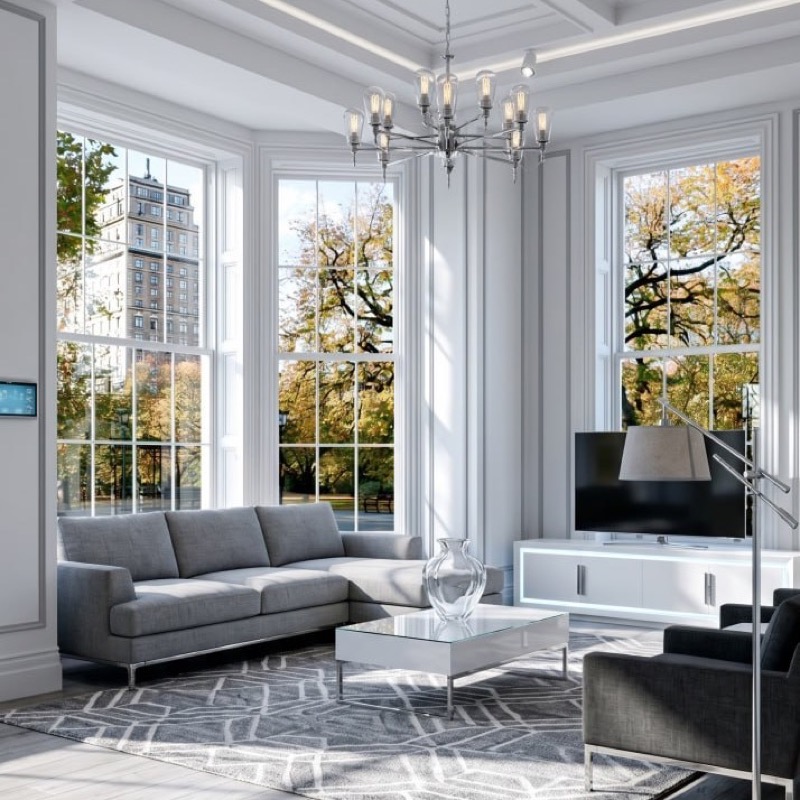
Low-profile furniture makes ceilings feel higher and rooms more spacious
5The Continuous Floor
Visual breaks in flooring make a room feel smaller. A continuous floor material — the same wood, tile, or carpet throughout — creates visual flow and expands the perceived space.
How to test with AI:
Generate:
- • "Small open-plan living room with different flooring in living and dining areas"
- • "Small open-plan living room with continuous walnut flooring throughout"
Pro tip: If you can't change the flooring, use a large rug that covers most of the room. A single large rug unifies the space better than several small rugs.
6Sheer Curtains, Not Heavy Drapes
Heavy curtains absorb light and create visual bulk at the edges of the room. Sheer curtains let light through, create softness, and don't compete for attention.
How to test with AI:
Generate:
- • "Small bedroom with heavy velvet curtains, dark colour, floor-length"
- • "Small bedroom with sheer linen curtains, light colour, ceiling-mounted track"
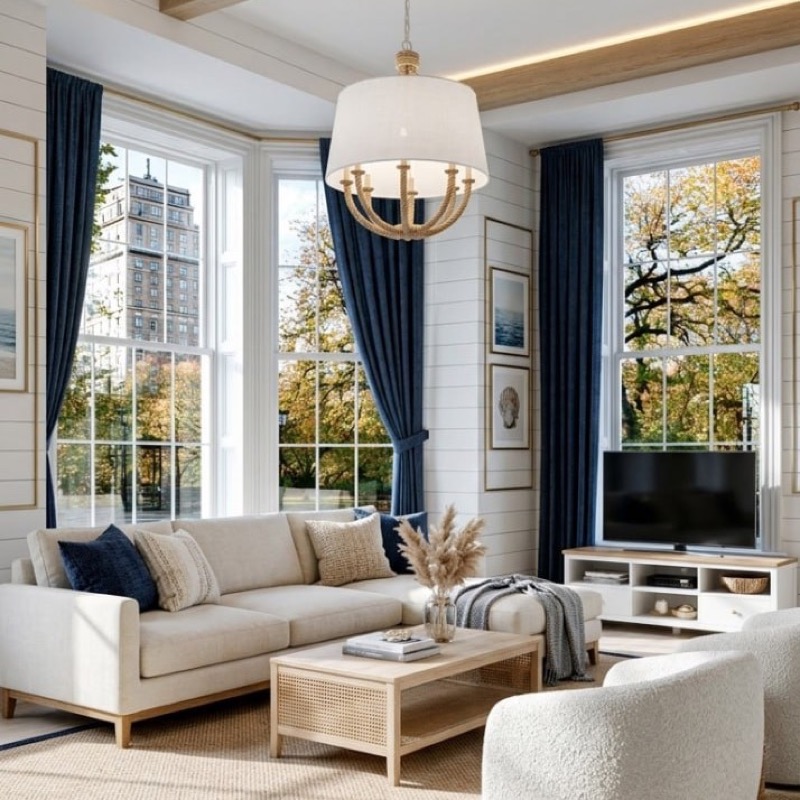
Sheer curtains let light through and create softness without visual bulk
7Multi-Functional Furniture
One piece that does two jobs saves space and reduces visual clutter. A sofa bed. A storage ottoman. A desk that folds into the wall. A bedside table with drawers.
How to test with AI:
Generate:
- • "Small bedroom with separate bed, desk, chair, and bookshelf"
- • "Small bedroom with storage bed, wall-mounted desk that folds away, floating shelves"
Pro tip: In small living rooms, a storage ottoman as a coffee table provides seating, surface, and storage in one piece.
8Vertical Storage
When floor space is limited, go up. Floor-to-ceiling shelving, wall-mounted cabinets, and tall wardrobes use vertical space that would otherwise be wasted.
How to test with AI:
Generate:
- • "Small bedroom with low wardrobe and bedside table"
- • "Small bedroom with floor-to-ceiling wardrobe and wall-mounted bedside shelves"
Pro tip: Open shelving feels lighter than closed cabinets. In very small rooms, floating shelves with a few curated objects feel more spacious than a full bookcase.
9Recessed and Hidden Lighting
Light fixtures that protrude into the room — bulky pendants, large table lamps, standard lamps — consume visual space. Recessed lighting, LED strips, and wall-mounted sconces provide the same illumination without the visual bulk.
How to test with AI:
Generate:
- • "Small living room with floor lamp, table lamp, and ceiling pendant"
- • "Small living room with recessed ceiling lights, wall sconces, and LED strip behind shelving"
Pro tip: LED strips behind headboards, under floating shelves, or above cabinets create ambient light without any visible fixture.
10The Big Rug
A small rug in a small room looks like a postage stamp. It breaks the floor into sections and makes the room feel choppy. A large rug that covers most of the floor unifies the space and makes it feel cohesive.
How to test with AI:
Generate:
- • "Small living room with small rug in front of sofa"
- • "Small living room with large rug that extends under sofa and coffee table"
Pro tip: The rug should be large enough that the front legs of all major furniture pieces sit on it.
11Glass and Reflective Surfaces
Glass furniture — coffee tables, side tables, console tables — is visually light. It doesn't block sightlines or absorb light. A glass table in a small room feels like it takes up no space at all.
How to test with AI:
Generate:
- • "Small living room with solid wood coffee table and side tables"
- • "Small living room with glass coffee table and acrylic side tables"
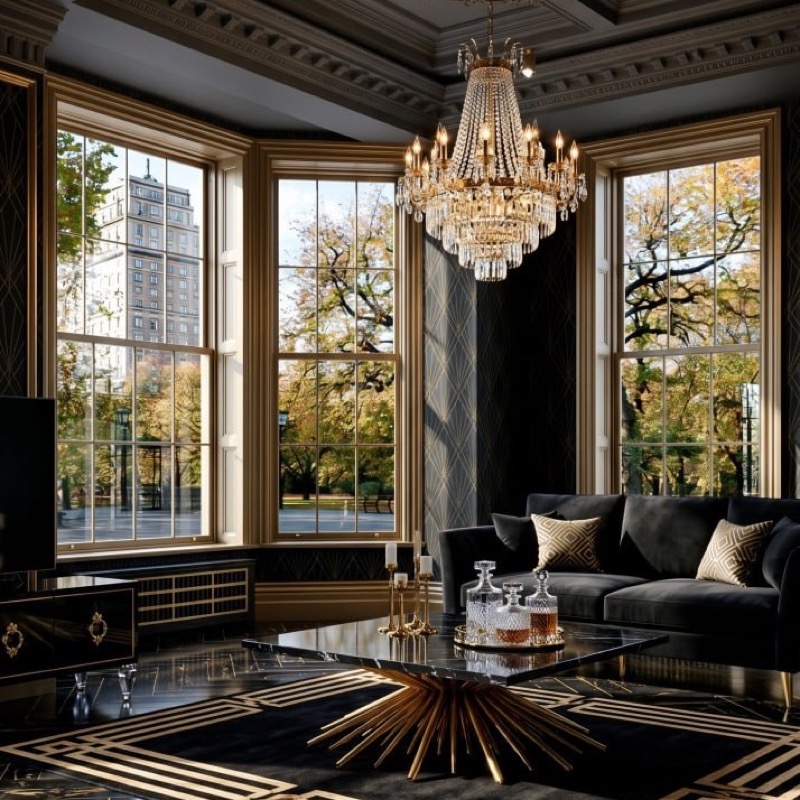
Glass furniture feels visually light and doesn't block sightlines
12The Single Focal Point
Small rooms with too many focal points feel cluttered. Choose one — a bed, a piece of art, a feature wall — and let everything else support it. The eye needs one place to rest.
How to test with AI:
Generate:
- • "Small bedroom with patterned wallpaper, bold headboard, statement chandelier, and colourful art"
- • "Small bedroom with quiet walls, simple bed, one large piece of art, and recessed lighting"
Pro tip: In small living rooms, make the media wall or fireplace the single focal point. Everything else supports it.
13Pocket and Sliding Doors
A standard door swing takes up 1–2 square metres of usable space. A pocket door or sliding door eliminates the swing arc and frees up that space for furniture or circulation.
How to test with AI:
Generate:
- • "Small bedroom with standard hinged door opening into the room"
- • "Small bedroom with sliding barn door or pocket door"
Pro tip: If you can't change the door, ensure it opens outward rather than inward. This is a zero-cost change that immediately adds usable space.
14Under-Bed Storage
The space under a bed is prime real estate in a small bedroom. Drawers, boxes, or a lift-up bed frame can store an entire wardrobe's worth of items without consuming any additional floor space.
How to test with AI:
Generate:
- • "Small bedroom with standard bed frame and freestanding wardrobe"
- • "Small bedroom with storage bed (drawers underneath) and wall-mounted shelves instead of wardrobe"
Pro tip: A storage bed with drawers on three sides provides more accessible storage than a lift-up bed, which requires lifting the mattress.
15The Uncluttered Surface
This is the simplest and most powerful technique: clear your surfaces. Every object on a surface is a visual decision. A clear surface is a visual rest. In small rooms, clear surfaces are essential.
How to test with AI:
Generate:
- • "Small bedroom with bedside table cluttered with books, lamp, phone, water glass, and accessories"
- • "Small bedroom with bedside table holding one lamp and one small object"
Pro tip: The "one in, one out" rule applies here. For every new object you bring into a small room, remove one.
Testing Your Small Room with AI: The Complete Workflow
Step 1: Photograph Your Small Room
- • Shoot from the corner in daylight
- • Show the full room — ceiling, floor, all walls, windows, doors
- • Include existing furniture so the AI understands proportions
- • Clear temporary clutter (keep permanent furniture in place)
Step 2: Generate the Baseline
Upload your photo and generate a basic design: "Small [room type] with current layout, no changes." This is your "before." Save it.
Step 3: Generate the Space-Expanded Version
Create a comprehensive brief using 5–7 of the techniques above:
"Small bedroom with light cream walls, continuous walnut flooring, large round mirror on the wall opposite the window, sheer linen curtains at ceiling height, low-profile platform bed with storage drawers, wall-mounted bedside shelves, recessed ceiling lighting, one large piece of art above the bed, uncluttered surfaces, minimal accessories."
This is your "after." Generate 3 variations.
Step 4: Compare Side by Side
Look at your "before" and "after" images. Ask:
- • Does the after feel larger?
- • Which specific techniques made the biggest difference?
- • Can I implement these changes in reality?
- • What's the budget for the changes that matter most?
Step 5: Create a Phased Plan
You don't need to do everything at once. Phase your implementation:
Phase 1 (Free/Low cost): Declutter, clear surfaces, rearrange furniture, move curtains to ceiling height
Phase 2 (£100–£500): Paint walls, add mirror, swap heavy curtains for sheers, replace bulky lighting
Phase 3 (£500–£2,000): Replace furniture with low-profile or multi-functional pieces, add wall-mounted storage
Phase 4 (£2,000+): Change flooring, install built-in storage, custom lighting design
Small Room-Specific AI Tips
Use Bespoke Mode for Creativity
Small rooms need creative solutions. Bespoke Mode lets you test unconventional ideas. "Small bedroom with Murphy bed that folds into the wall, desk that folds down from the same unit, floating shelves, and a large mirror."
Use Materials Mode for Precision
Small rooms are unforgiving. The wrong material choice is visible immediately. Materials Mode lets you specify exact materials and see how they interact in a confined space.
Generate from Multiple Angles
Upload photos from different corners of the same room. The AI will generate designs from each angle, helping you understand how the space reads from different positions.
Test Furniture Proportions
The AI preserves your room's dimensions. When it places a sofa, bed, or desk in your generated image, that piece is proportionally correct for your space. Use the image as a guide to find real furniture with similar dimensions.
Style Inspiration for Small Rooms
For small-room inspiration across multiple styles, see our style-specific collections:
Modern Home
Clean lines and minimal furniture maximise small spaces
Boho
Layered textures that feel cosy without being cramped
Dark Blush
Light colours and simple furniture expand space visually
Ready to Make Your Small Room Look Bigger?
Download the Aspire Interiors app, upload your small room photo, and start testing. Generate a light-wall version. Generate a wall-mounted-storage version. Generate a mirror version. See which techniques make the biggest difference.
↓ Download on the App StoreFrequently Asked Questions
Can AI really make a small room look bigger?
AI can't change your room's dimensions, but it can show you exactly how design choices affect perceived space. By generating multiple versions of the same room with different techniques, you can see which combinations create the most spacious feeling. Then you implement those changes in reality.
What's the single most effective technique?
The combination of light walls + good lighting + uncluttered surfaces. These three things cost little to nothing but have the biggest visual impact. Start there before spending money on furniture or renovations.
How much does it cost to make a small room look bigger?
It can be free (declutter, rearrange, paint if you DIY) or it can cost thousands (new flooring, built-in storage, custom lighting). The AI helps you prioritise — test everything first, then invest in the changes that make the biggest difference.
What if I can't change my furniture?
Focus on the techniques that don't require new furniture: paint walls, add a mirror, change curtains, improve lighting, declutter. These alone can transform a small room's feel without buying anything large.
Can I use AI to design a small rental room?
Yes. Focus on non-permanent changes: furniture, lighting, textiles, mirrors, and accessories. The AI can show you what's possible without painting walls or changing flooring.
What's the best AI tool for small room design?
For UK homeowners, Aspire Interiors (iOS) is particularly strong for small rooms because it preserves your actual architecture and proportions. The AI works within your real dimensions, not a generic template. For alternatives, see our Best AI Room Design Tools UK 2026 comparison.
Can AI help with awkward-shaped small rooms?
Yes. L-shaped rooms, rooms with sloped ceilings, narrow corridors — the AI preserves your actual architecture and generates designs that work within those constraints. Upload photos that show the awkward angles, and the AI will design around them.
How do I make a small room feel cosy, not cramped?
The difference between cosy and cramped is control. Cosy is intentional: warm lighting, soft textures, a curated colour palette, clear surfaces. Cramped is accidental: too much stuff, poor lighting, clashing colours, cluttered surfaces. Use the AI to test cosy versus cramped — the difference is usually 3–4 specific choices.
Related Reading
AI Interior Design: The Complete Guide
The foundational guide to AI-powered room design
AI Home Design: How to Redesign Your Entire House
Whole-home design for consistent style and flow
How to Design Your Room with AI: Complete Guide
Step-by-step process for any room type
How to Design a Living Room with AI
Room-specific guide with layout, lighting, and furniture tips
AI Interior Design vs Hiring a Designer
Honest comparison to help you decide which approach fits your project
How to Design Media Walls with AI
Room-specific guide for media wall design
Best AI Room Design Tools UK 2026
Independent comparison of AI design tools
About the Team
By Mark Lunnemann — Founder, AutoMazen.ai.
Aspire Interiors was built by the team at AutoMazen.ai, a London-based app development company specialising in AI-powered design tools. We created Aspire Interiors because we were frustrated with design apps that generated pretty pictures with no usable framework behind them.
Your Small Room Is an Opportunity to Be Clever
Download the Aspire Interiors app, upload your small room photo, and start testing. Two free designs is enough to test three different approaches. Most people find their winning combination by the second or third generation.
↓ Download on the App StoreNo pressure, no surprises — just good design.
Published: 26 June 2026. Last updated: 26 June 2026.
The Aspire Interiors app requires iOS. Android and web users can find alternatives in our AI room design tools comparison.