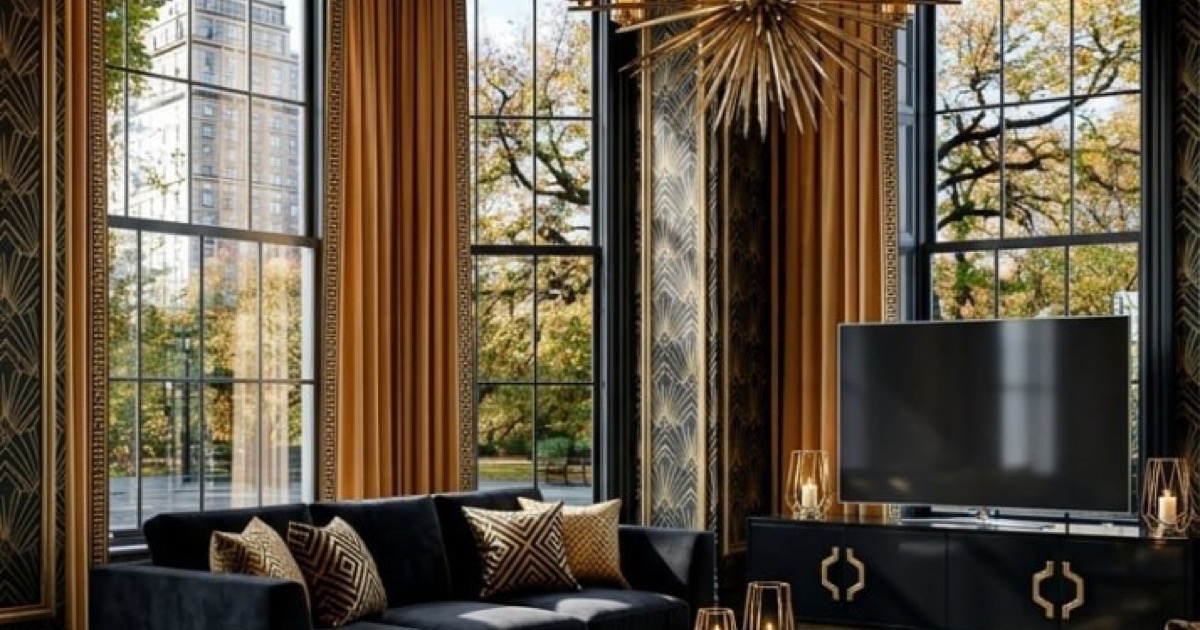
AI interior design creates room concepts from a photo in under a minute, free or for a few pounds a month; a human interior designer typically charges £500 to £2,500 per room for execution, sourcing and project management. This guide compares both on cost, speed, control and results.
How to Decide: AI, Designer, or Both
- Define your project scope. A restyle of one room is a different job from a structural renovation — scope decides the tool before budget does.
- Set your total budget. AI runs from free to about £30 a month; designers typically charge £500–£2,500 per room, plus sourcing.
- Try AI concepts first. Generate a few directions in the Aspire Interiors app — even if you hire a designer later, you will brief them better.
- Flag any complexity. Listed buildings, structural changes and full renovations need human expertise, planning permissions and professional coordination throughout.
- Hire for execution. Bring in a designer when the project needs sourcing, trades, project management or technical drawings.
- Combine where sensible. Most UK homeowners use AI for direction and visualisation, then a designer for the final execution stretch.
The honest side-by-side — where AI wins on cost and speed, where a designer wins on execution.
| Option | Typical cost | Turnaround | Best for | Verdict |
|---|---|---|---|---|
| AI design app — free tier | £0 | Minutes | Testing ideas, first concepts | Start here |
| AI design app — paid | £9.99–£30/month | Minutes per design | Whole-home direction, iteration | Best value for visualisation |
| Human interior designer | £500–£2,500/room | Weeks to months | Execution, sourcing, project management | Essential for complex projects |
The question comes up in every renovation Facebook group, at every dinner party, in every showroom: should I use AI to design my room, or should I hire a proper interior designer?
The answer depends on what you need, what you can spend, and what you're trying to achieve. AI interior design and professional designers aren't competing for the same job. They're different tools for different stages of the same process.
This is an honest comparison. No corporate spin, no AI-is-magic hype, no designer-superiority snobbery. Just the facts, the costs, the limitations, and the right fit for your specific project.
What Each Approach Actually Does
AI Interior Design
AI interior design generates photorealistic images of your room transformed according to your brief. You upload a photo, describe what you want, and the AI creates a visualisation of that room with new materials, furniture, lighting, and layout — while preserving your actual architecture.
What it does well:
- • Visual exploration and idea generation
- • Testing material combinations before buying
- • Creating visual briefs for builders and contractors
- • Comparing multiple design directions quickly
- • Learning what you like through iteration
What it doesn't do:
- • Source real products or manage procurement
- • Handle construction logistics or contractor coordination
- • Solve structural problems (load-bearing walls, plumbing, electrics)
- • Provide bespoke furniture design or custom joinery
- • Navigate building regulations or planning permission
Hiring an Interior Designer
A professional interior designer provides a complete service: concept development, spatial planning, material specification, product sourcing, contractor coordination, and project management. They handle the design, the procurement, and often the installation.
What it does well:
- • Solve complex spatial problems
- • Source and procure real products within your budget
- • Coordinate contractors, builders, and trades
- • Design bespoke furniture and custom joinery
- • Manage timelines, budgets, and quality control
- • Provide access to trade-only suppliers and discounts
What it doesn't do (or does less well):
- • Generate 20 variations of your living room in an hour for you to compare
- • Let you experiment freely without cost
- • Provide instant visual feedback on your ideas
- • Work for the price of a coffee
The Honest Comparison
Here's the side-by-side comparison that matters. This table is the heart of the article — bookmark it, screenshot it, share it with anyone facing the same decision.
| Factor | AI Interior Design | Professional Interior Designer |
|---|---|---|
| Cost | Free to £15/month | £500–£2,500+ per room (or % of project value) |
| Speed to first concept | 15–20 seconds | 1–4 weeks |
| Number of concepts | Unlimited | 2–5 typically |
| Product sourcing | No | Yes — full procurement service |
| Contractor coordination | No | Yes — manages builders, electricians, etc. |
| Custom furniture design | No | Yes — bespoke joinery and furniture |
| Spatial problem-solving | Basic — works within existing architecture | Advanced — can reconfigure layouts, suggest structural changes |
| Budget management | No | Yes — tracks costs, manages overruns |
| Quality control | Visual only | Physical — site visits, snagging, finishing |
| Building regulations | No | Yes — understands compliance requirements |
| Best for | Exploration, visualisation, decision-making | Execution, complex projects, high-end finishes |
| Learning curve | Minimal — upload photo, describe, generate | None for you — they handle everything |
| Visualisation quality | Photorealistic renders of your actual room in seconds | Mood boards and concepts; professional renders cost extra and take weeks |
| Measurement accuracy | Approximate — never order anything structural off a render | Exact — site surveys, tape measures, joinery drawings |
| Iteration cost & revisions | Pennies — regenerate endlessly until it clicks | Each revision round costs time, and usually money |
| Accountability & liability | None — output is inspiration, not specification | Professional duty of care, insurance, contracts |
| Emotional value | You do the work, you own the result | Hand-holding, reassurance, expert guidance |
When AI Interior Design Is the Right Choice
Scenario 1: You're Exploring Ideas
You know your room needs a refresh but you don't know what you want. You like elements from three different Pinterest boards and you're not sure how they'd look in your actual space.
AI is better here. You can generate 20 different directions in an hour, see what resonates, and refine from there.
Scenario 2: You Have a Clear Vision but Need Validation
You know exactly what you want: walnut media wall, brass lighting, olive velvet sofa. But you need to see it in your room before you commit £15,000 to a builder.
AI is better here. Generate the room, see the vision realised, and use the image as a visual brief for your builder.
Scenario 3: You're on a Tight Budget
You have £3,000 to refresh your living room. A designer's fee would eat half that budget before you buy a single cushion.
AI is better here. Use the AI to create the design, then source affordable alternatives yourself.
Scenario 4: You Enjoy the Process
You actually like scrolling through options, comparing colours, and making decisions. The design process is part of the pleasure for you.
AI is better here. If you enjoy the creative process, AI gives you the tools without the cost.
Scenario 5: You Need to Brief a Designer
You want to hire a designer but you don't want to waste their time (and your money) figuring out what you like. Use AI first to define your direction, then hire a designer to execute it.
AI is better here. Walk into your first designer meeting with a folder of AI-generated images that show exactly what you want.
When Hiring a Designer Is the Right Choice
Scenario 1: Structural Changes
You're knocking down walls, moving plumbing, or changing electrics. The design isn't just about materials — it's about spatial reconfiguration.
Designer is essential here. AI can show you what a new layout might look like, but it can't tell you whether that wall is load-bearing.
Scenario 2: High-End Finishes
You're spending £50,000+ on a kitchen or £30,000+ on a bathroom. The material choices are expensive and permanent. Get it wrong and the cost of fixing it dwarfs the designer's fee.
Designer is worth it here. They have access to trade suppliers, know which materials perform well in real life, and can manage the installation quality.
Scenario 3: You Hate Decision-Making
The thought of choosing between 40 paint colours makes you want to move house. You want someone to say "this is the right choice" and for it to actually be right.
Designer is essential here. A good designer makes 200 decisions so you don't have to.
Scenario 4: Complex Logistics
Your project involves five trades, a six-month timeline, products from three countries, and a Victorian house with no straight walls.
Designer is essential here. Project management is half the job. A designer coordinates the plumber, electrician, plasterer, carpenter, and decorator.
Scenario 5: Bespoke Joinery or Furniture
You want a media wall that fits your exact alcove dimensions, a window seat with integrated storage, or a dining table made from a specific piece of timber.
Designer is better here. AI generates images; designers generate things. A designer works with joiners and cabinet-makers to create physical objects.
The Hybrid Approach: Best of Both Worlds
Most successful projects use both. Here's the workflow that gets the best results:
Phase 1: Exploration (AI)
Use AI to figure out what you want. Generate 20 directions. Test material combinations. See what works in your actual space. Save your favourite 3–5 images.
Time: 1–2 hours | Cost: £0–£15 | Output: A clear visual direction
Phase 2: Refinement (Designer)
Take your AI-generated images to a designer. Say: "This is what I want. Can you make this real?" The designer's job shifts from concept exploration to execution.
Time: 4–12 weeks | Cost: £1,000–£10,000+ | Output: A designed, sourced, and managed project
Phase 3: Communication (AI + Designer)
Throughout the project, use AI to test last-minute decisions. "The designer suggested this tile — can I see it in the room before I commit?"
Time: 15 minutes per decision | Cost: £0 | Output: Confidence in specific choices
Why This Hybrid Works
- • You get the speed and freedom of AI for exploration and visualisation
- • You get the expertise and management of a designer for execution and procurement
- • You save money because the designer doesn't charge for concept exploration
- • You get better results because you arrive with a clear direction, not a vague brief
- • You maintain control because you know what you want before you hire someone
The Cost Reality
Let's talk actual numbers for a typical 4-bedroom house renovation:
AI-Only
AI tool: £15/month × 6 months = £90
Your time: 20–40 hours
Risk: Higher chance of mistakes
Total: £90 + your time
Best for: Confident DIYers, small projects, tight budgets
Designer-Only
Designer fee: 10–15% of project = £5,000–£15,000
Your time: 5–10 hours
Risk: Lower — professional oversight
Total: £5,000–£15,000 + project
Best for: High-value projects, complex logistics
Hybrid ⭐
AI: £90
Designer (reduced): £2,000–£5,000
Your time: 10–20 hours
Risk: Low — clear direction + execution
Total: £2,090–£5,090 + project
Best for: Most homeowners — balanced cost, quality, control
What the AI Actually Does Well (And What It Doesn't)
AI Strengths
Architectural preservation
The best AI tools (including Aspire Interiors) preserve your room's actual dimensions, window placements, and structural features. The design fits your space, not a generic template.
Material understanding
Modern AI understands real materials — walnut versus oak, honed versus polished marble, brushed versus polished brass. This means your material choices translate accurately to the output.
Speed of iteration
Generate 10 versions in 10 minutes. Test combinations you'd never have time to explore manually. This is where AI shines — it's a creativity accelerator.
Visual communication
An AI-generated image is worth a thousand words when briefing builders, designers, or partners. It removes ambiguity and ensures everyone sees the same vision.
AI Limitations
No physical reality
The AI doesn't know whether that sofa is actually available, whether the marble worktop is in stock, or whether the brass lighting is within your budget. It generates the ideal; you source the reality.
No spatial problem-solving
The AI works within your existing architecture. It can't suggest knocking down a wall, moving a doorway, or reconfiguring a layout to improve flow. That's designer territory.
No quality control
The AI generates images. It doesn't inspect the plasterer's work, check that the paint was mixed correctly, or ensure the cabinet doors align. A designer does this.
No procurement
The AI doesn't have trade accounts, supplier relationships, or access to discounted materials. Designers often save you money through better procurement that offsets their fee.
No emotional intelligence
A good designer reads your hesitation, notices when you're not excited about a choice, and digs deeper to find what you actually want. AI does what you tell it. A designer tells you what you actually want.
When to Use Which: The 30-Second Version
- Cosmetic refresh (paint, furniture, styling): AI alone is enough.
- Whole-home style hunt: AI to explore every direction, then decide.
- Extension or structural work: designer (or architect) — non-negotiable.
- Listed building: designer with conservation experience.
- "Just handle it": full-service designer.
The 2026 Picture: Unbundling, Not Replacement
What's actually happening to the profession isn't replacement — it's unbundling. The designer's job has split into a visualisation layer (now automated and nearly free) and an execution layer (unchanged, human, and arguably more valuable now that clients arrive with clear renders instead of vague Pinterest boards). The fuller argument: can AI replace an interior designer?
The Verdict: Which Should You Choose?
Choose AI If:
- • Small to medium project (£500–£5,000)
- • You enjoy the creative process
- • Clear vision but need to see it first
- • Need a visual brief for a builder
- • Confident sourcing products yourself
- • Want to understand what you like before hiring a designer
Choose a Designer If:
- • Large or complex project (£10,000+)
- • Making structural changes
- • Need bespoke joinery or furniture
- • Hate decision-making and want hand-holding
- • Need contractor coordination
- • Want access to trade suppliers
- • Renovating a listed building
Choose Hybrid If:
- • Medium to large project (£5,000–£20,000)
- • Want control over the vision
- • Want help with execution
- • Want to save on designer fees
- • Need a designer for procurement
- • Want professional confidence without full cost
Ready to Explore AI Interior Design?
Whether you use AI alone, hire a designer, or combine both approaches, the first step is the same: figure out what you want.
Download the Aspire Interiors app, upload your room, and generate your first design. Two free designs let you test the waters without commitment. Generate five different directions. See what resonates. Save your favourites.
Then decide: do you need a designer, or does AI give you everything you need?
↓ Download on the App StoreFrequently Asked Questions
Can AI interior design replace a designer completely?
For small projects with no structural changes, yes — AI plus your own sourcing can replace a designer. For anything involving building work, bespoke joinery, or complex logistics, no. AI is a visualisation tool, not a project manager.
Will a designer be offended if I use AI first?
Good designers welcome clients with clear direction. An AI-generated image is a better brief than "I want it to feel cosy." The designer can focus on what they do best — sourcing, coordinating, and problem-solving — rather than guessing your taste.
Can I use AI and a designer on the same project?
Absolutely. In fact, this is the most cost-effective approach for most projects. Use AI to explore and define your direction. Then hire a designer to source, specify, and manage the execution.
Is AI interior design accurate enough to build from?
The AI preserves your room's architectural proportions accurately — ceiling height, window placement, door positions, overall dimensions. However, always verify furniture sizes against real-world products before purchasing.
What if the AI suggests something that doesn't exist?
This happens. The AI might generate a beautiful brass pendant that doesn't exist in reality, or a sofa in a colour that no manufacturer offers. Use the AI image as inspiration, then work with your designer or search yourself to find the closest real-world equivalent.
How do I find a good interior designer?
Look for designers who specialise in your project type (residential, renovation, new-build). Check their portfolio for projects similar to yours. Ask for references. Meet them in person — you need to trust their taste and their process. Expect to pay £50–£200 per hour or 10–15% of project value.
Can AI help me brief a designer?
Yes — and this is one of its most valuable uses. Generate 3–5 AI images that show exactly what you want. Walk into your designer meeting with a clear visual brief. This saves weeks of back-and-forth and ensures the designer understands your vision from day one.
What's the best AI tool for UK homeowners?
For iOS users, Aspire Interiors offers the best architectural preservation and material specificity for UK homes. For web-based alternatives, see our Best AI Room Design Tools UK 2026 comparison. For a complete guide to AI design, see our AI Interior Design Complete Guide.
Is AI interior design better than hiring a designer?
For visualisation and early direction, AI is faster and far cheaper. For listed buildings, complex renovations, or high-end project management, a human designer is still the better choice. Most UK homeowners use AI first, then hire a designer for the final 20%.
How much does AI interior design cost compared to a designer?
AI room design apps range from free to about £30/month. A human interior designer typically charges £500–£2,500 per room. AI works for visualisation and concept; designers charge for execution, sourcing, and coordination.
Should I use AI or an interior designer for a full renovation?
Use both, in sequence. A full renovation involves structure, permissions and trades — that is designer territory. But running AI concepts first costs nothing and gives you a clear visual brief, which typically shortens the designer's concept stage and reduces revision rounds.
Related Reading
AI Interior Design: The Complete Guide
The foundational guide to AI-powered room design
Can AI Replace an Interior Designer?
The honest answer — where AI wins, where humans are untouchable
AI Home Design: How to Redesign Your Entire House
Whole-home design for consistent style and flow
How to Design Your Room with AI: Complete Guide
Step-by-step process for any room type
How to Design a Living Room with AI
Room-specific guide with layout, lighting, and furniture tips
How to Make a Small Room Look Bigger with AI
15 proven techniques for maximising small spaces
How to Design Media Walls with AI
Room-specific guide for media wall design
Best AI Room Design Tools UK 2026
Independent comparison of AI design tools
About the Team
By Mark Lunnemann — Founder, AutoMazen.ai.
Aspire Interiors was built by the team at AutoMazen.ai, a London-based app development company specialising in AI-powered design tools. We created Aspire Interiors because we were frustrated with design apps that generated pretty pictures with no usable framework behind them.
Ready to Explore AI Interior Design?
Download the Aspire Interiors app, upload your room, and generate your first design. Two free designs is enough to test three different approaches. Most people find their winning combination by the second or third generation.
↓ Download on the App StoreNo pressure, no surprises — just good design.
Published: 26 June 2026. Last updated: 26 June 2026.
The Aspire Interiors app requires iOS. Android and web users can find alternatives in our AI room design tools comparison.