AI TV Wall Design Ideas: 12 Styles for 2026
26 July 2026 · 12 min read
The TV wall is the hardest-working wall in a British living room. It has to make a large black rectangle look intentional, carry storage and lighting, and still feel like part of a designed space rather than an electronics corner.
AI has changed how you approach it. Instead of guessing from Pinterest boards, you can upload a photo of your actual room and preview a dozen TV wall designs on your own wall — in your own light, with your own proportions. Below are 12 AI TV wall design ideas generated with Aspire Interiors, from dark fluted walnut to a living green wall, plus practical tips on sizing, height and lighting.
Want the full architectural treatment with fire and joinery included? That's a media wall — we cover those in depth in our AI media wall design ideas guide. This post is about the wall itself: the backdrop your TV deserves.
↓Start your AI TV wall designJump to a style
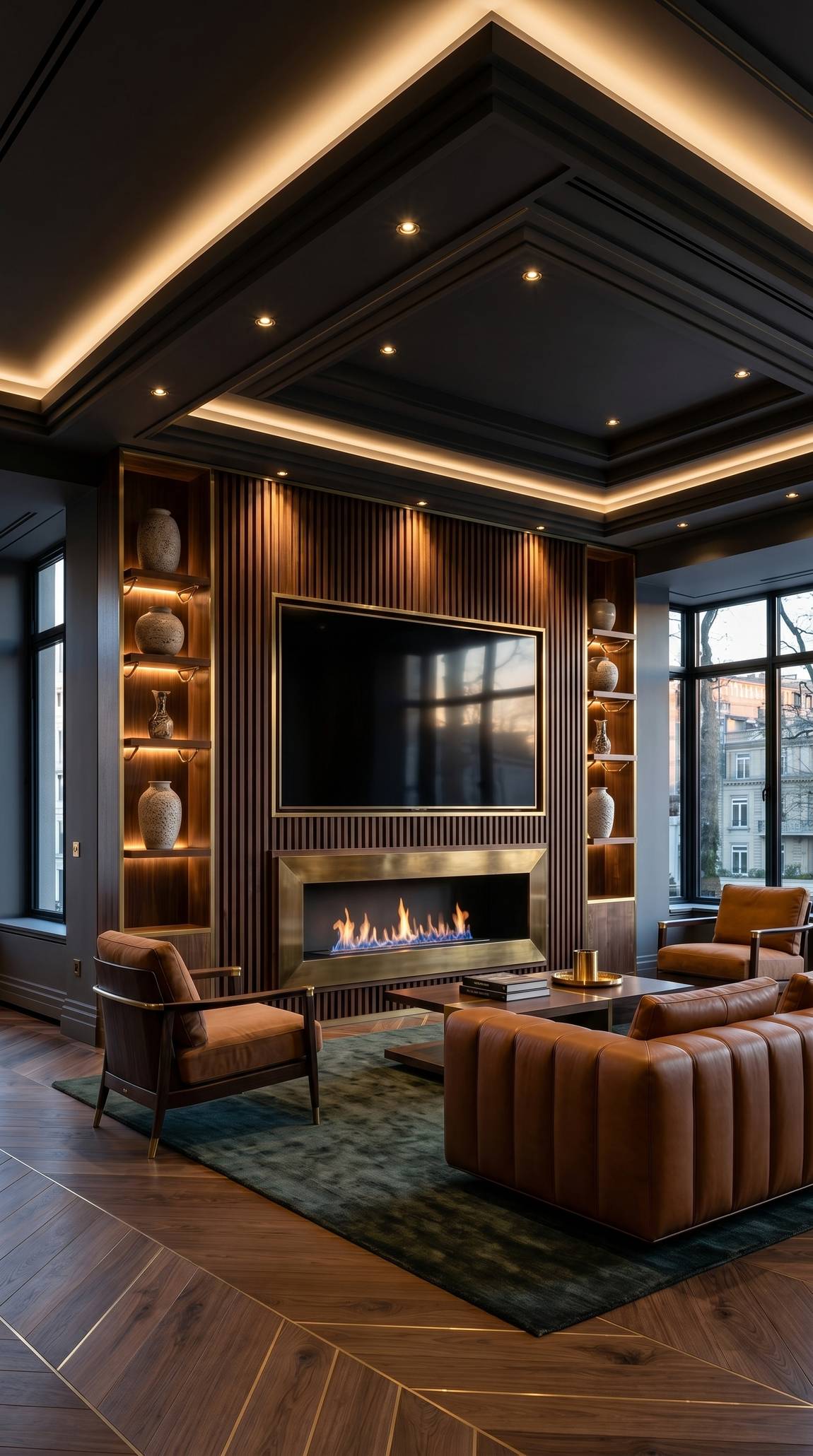
1. Dark Fluted Walnut — Hotel Luxe
Fluted walnut is the defining TV wall material of the decade, and in its dark form it turns a living room into something closer to a five-star hotel lounge. The vertical fluting draws the eye upward, the brass fire surround anchors the composition, and warm LED strips inside the display niches make ceramics glow.
This style works best in rooms with decent natural light or layered artificial lighting — dark timber absorbs both. Pair with tan leather and a patterned rug to stop the palette going flat.
2. Light Fluted Walnut — Scandi Luxe
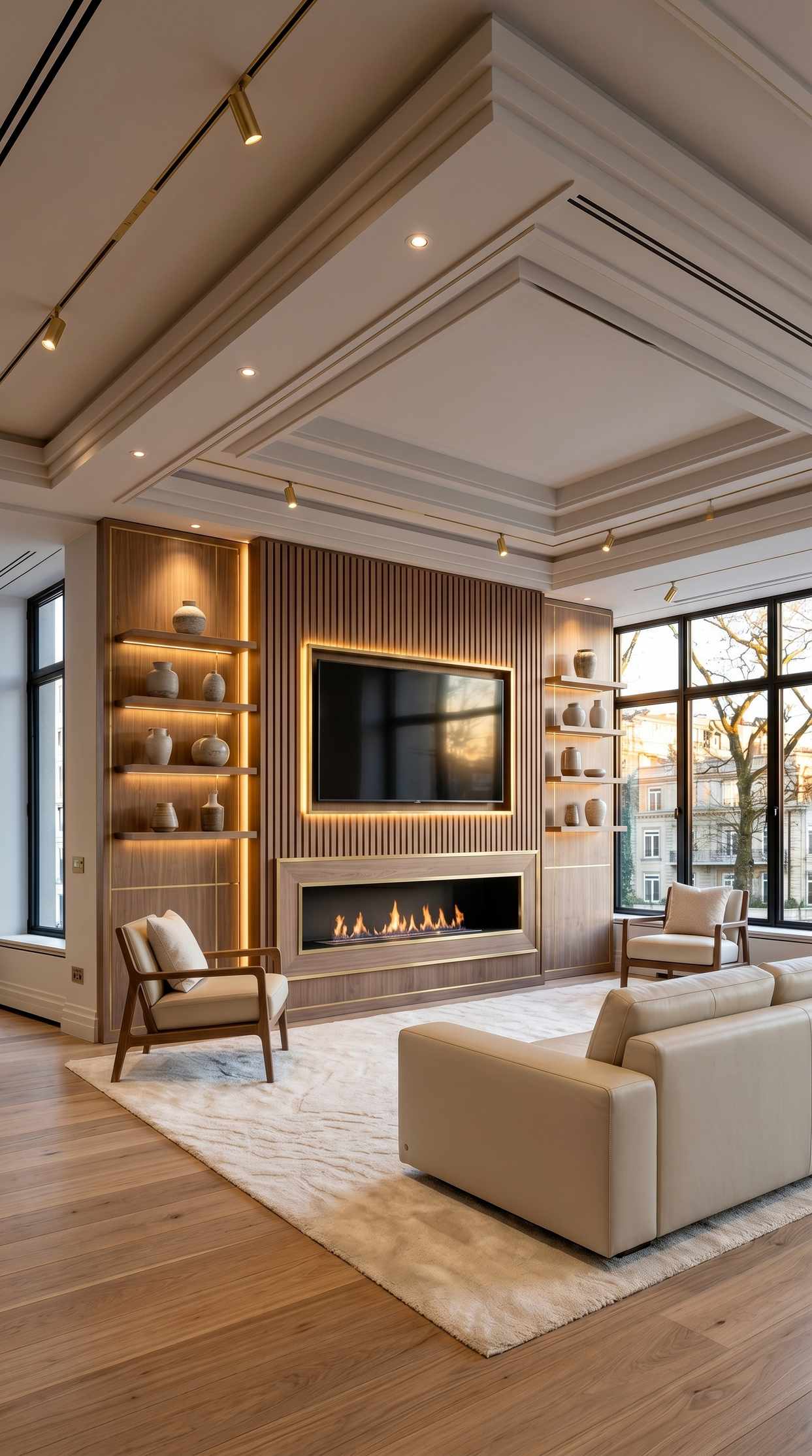
The same fluting, completely different mood. Light oak-tone walnut keeps the texture but bounces daylight around the room, making it the safer choice for smaller or north-facing living rooms. A slim linear fire under the TV adds warmth without visual weight.
Notice how the shelving is kept sparse — a handful of vessels per niche. With light timber, clutter shows fast, so edit hard.
3. Emerald Marble Grand — Art Deco Statement
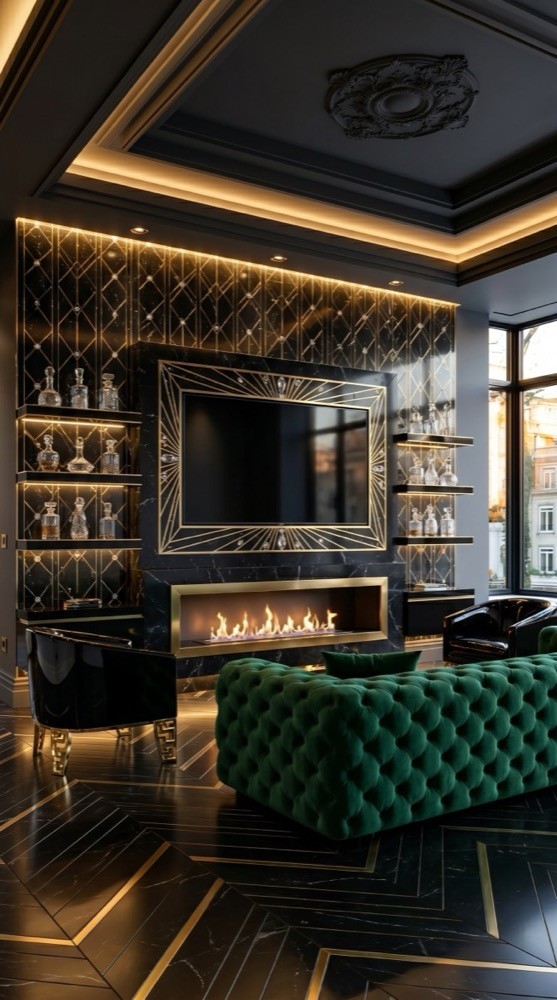
If you want guests to stop mid-sentence, this is the one. Deep green marble with gold veining, fan-patterned deco inlays, and a framed TV recess that makes the screen feel like part of the architecture rather than an afterthought.
A wall this strong dictates the rest of the room: velvet, brass and dark polished floors keep it coherent. Best suited to larger living rooms where the wall can breathe.
4. Travertine Modern — Quiet Luxury
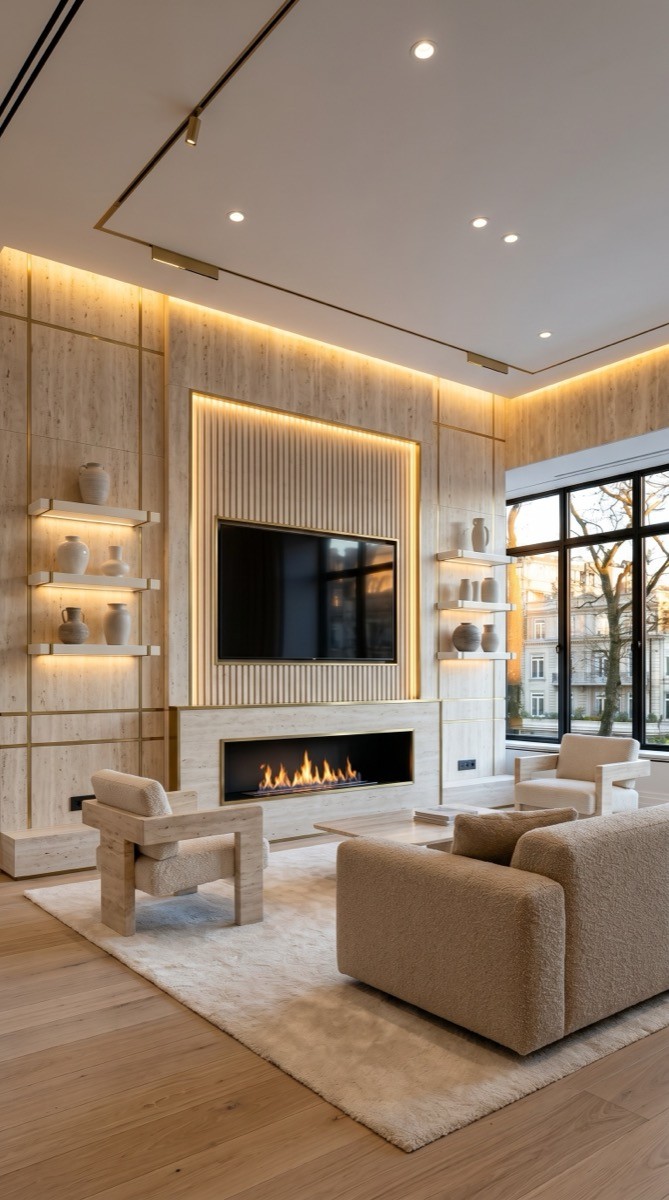
Travertine is having a long moment, and on a TV wall it delivers quiet luxury better than almost anything — warm, textural, and calm rather than showy. Here a fluted centre panel frames the TV while backlit niches carry simple stoneware.
The trick with travertine is restraint everywhere else: bouclé seating, a wool rug, and no competing patterns. The stone does the talking.
5. Clean Modern — Glossy Minimal
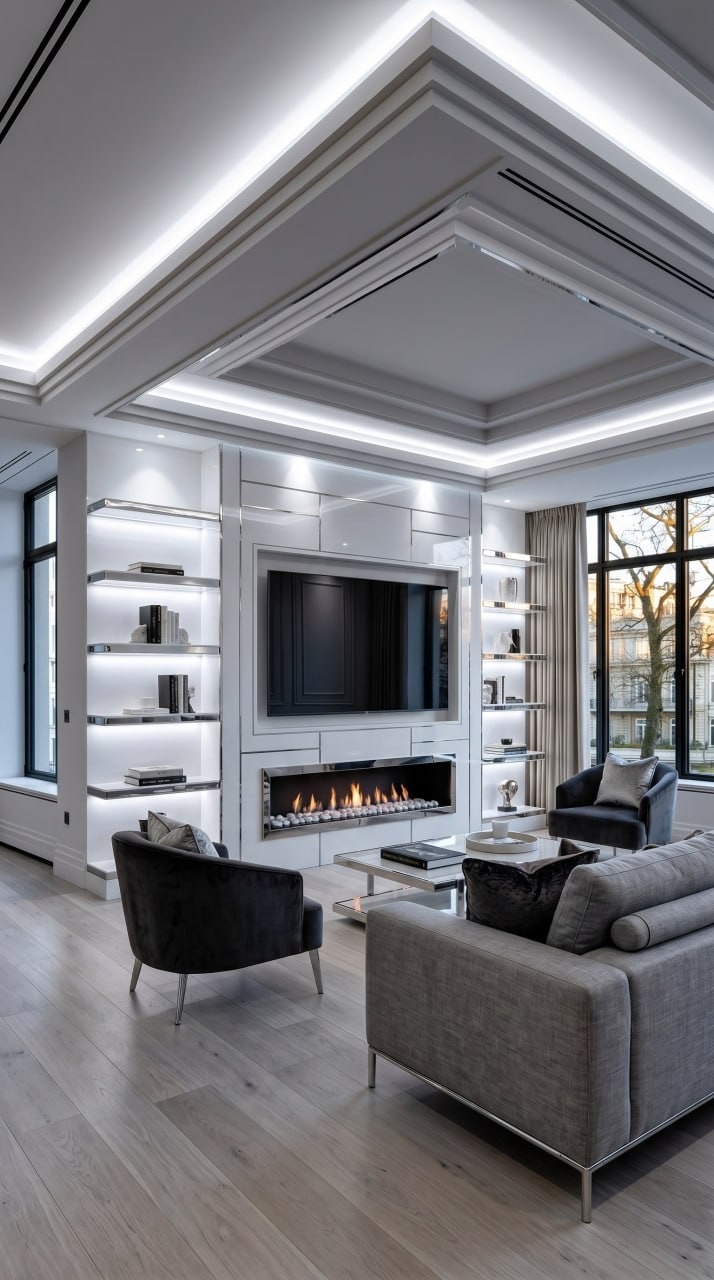
For minimalists, the best TV wall is the one that almost disappears. Glossy handle-less panels in soft grey hide storage, the TV sits flush, and a simple pebble-bed fire runs underneath. No shelving, no ornament, no noise.
This is also the most forgiving style for awkward walls — flat panels can be scribed around chimney breasts and alcoves without breaking the look.
6. Mixed Metals Luxe — The Framed TV
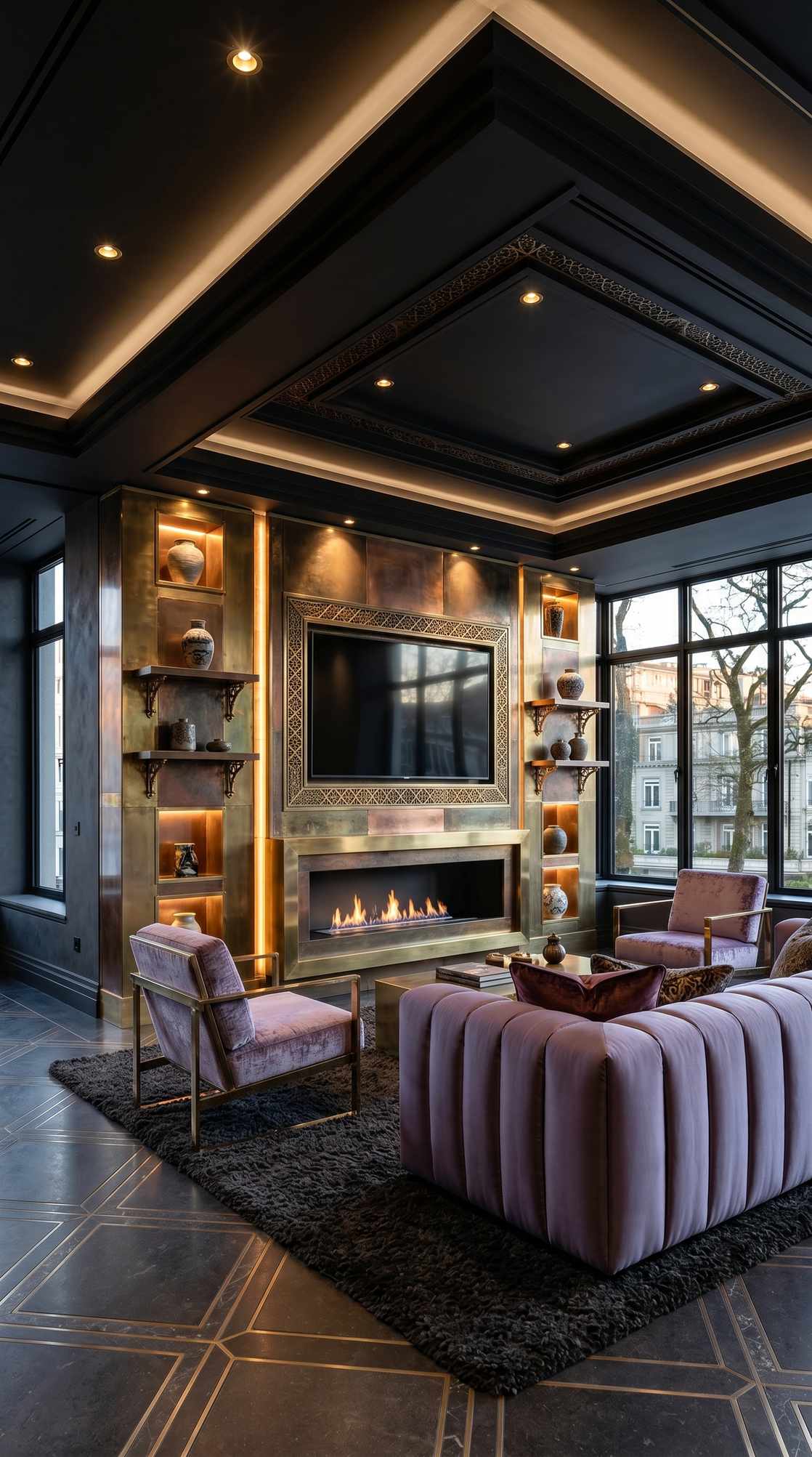
Here's a clever trick for making a TV feel intentional: frame it like art. This mixed-metals wall surrounds the screen with an ornate brass frame against brushed metal panels, so the TV reads as a centrepiece rather than a black hole.
Warm accent lighting is essential with metal finishes — cool white light makes brass look harsh. Keep the rest of the palette soft: mauve, velvet, and deep pile texture.
7. Aubergine and Gold — Bold Deco Colour
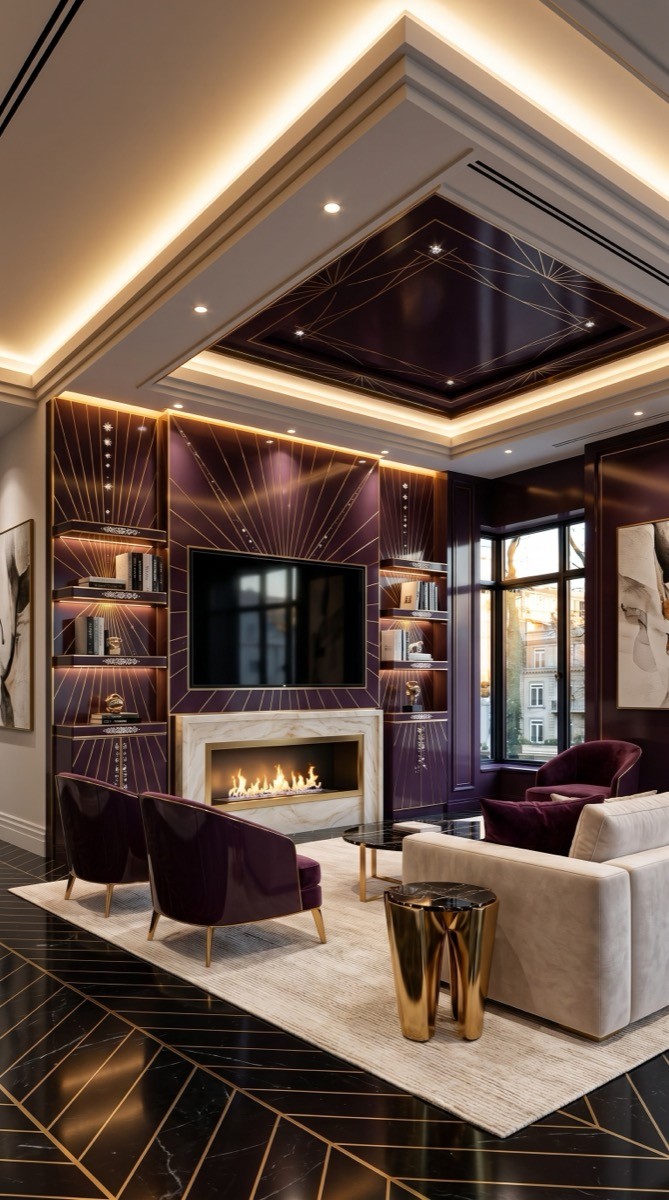
Aubergine is a brave choice that pays off. The deep purple panels with gold sunburst inlays give this TV wall genuine theatre, while the pale marble fire surround stops it getting too heavy. The ceiling echoes the pattern — a nice touch for formal rooms.
If full aubergine feels like a leap, use it on the TV wall only and keep the other walls neutral. One bold wall is confidence; four is a commitment.
8. Living Green Wall — Biophilic Boho
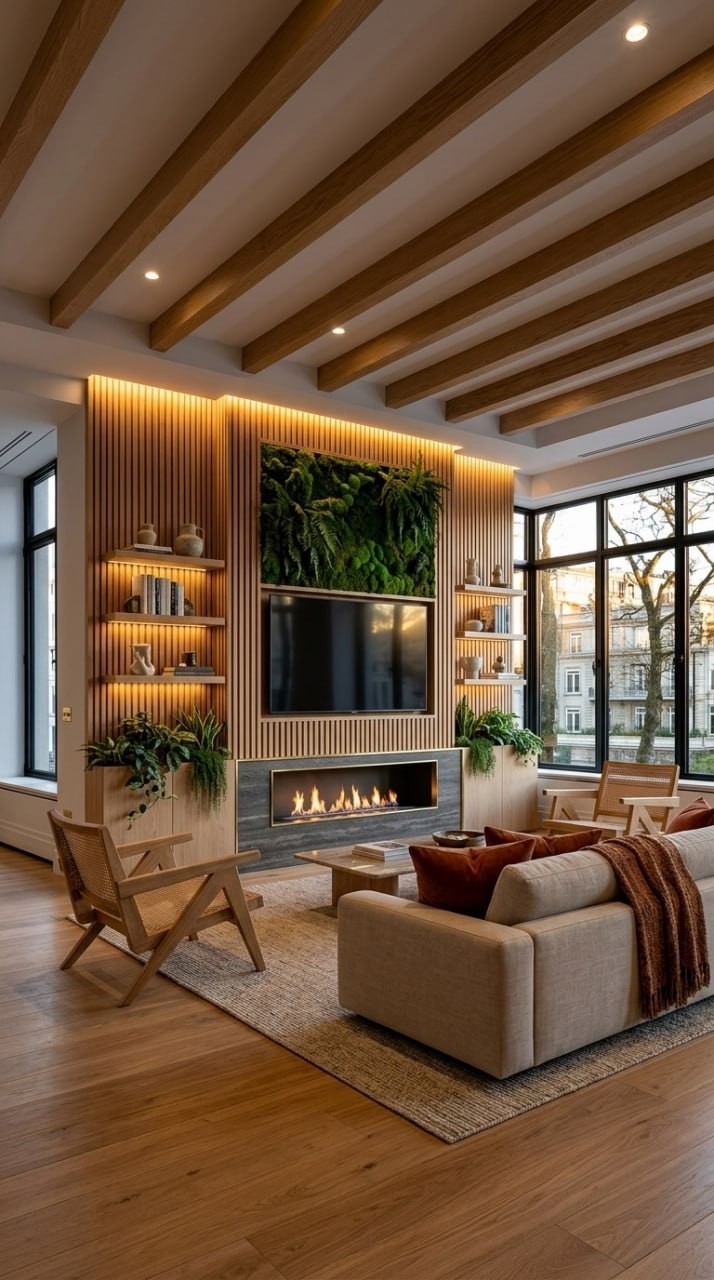
The most unexpected idea on this list: a living wall growing directly above the TV. Timber slats frame the planting, a stone fire runs below, and the whole wall becomes a vertical garden with a screen in the middle.
In reality, use high-quality preserved moss or realistic faux planting above a TV — real irrigation above electronics is a headache. The effect, either way, is stunning, and it pairs naturally with rattan, jute and warm woods.
9. Dark Blush Moody — Evening Glamour
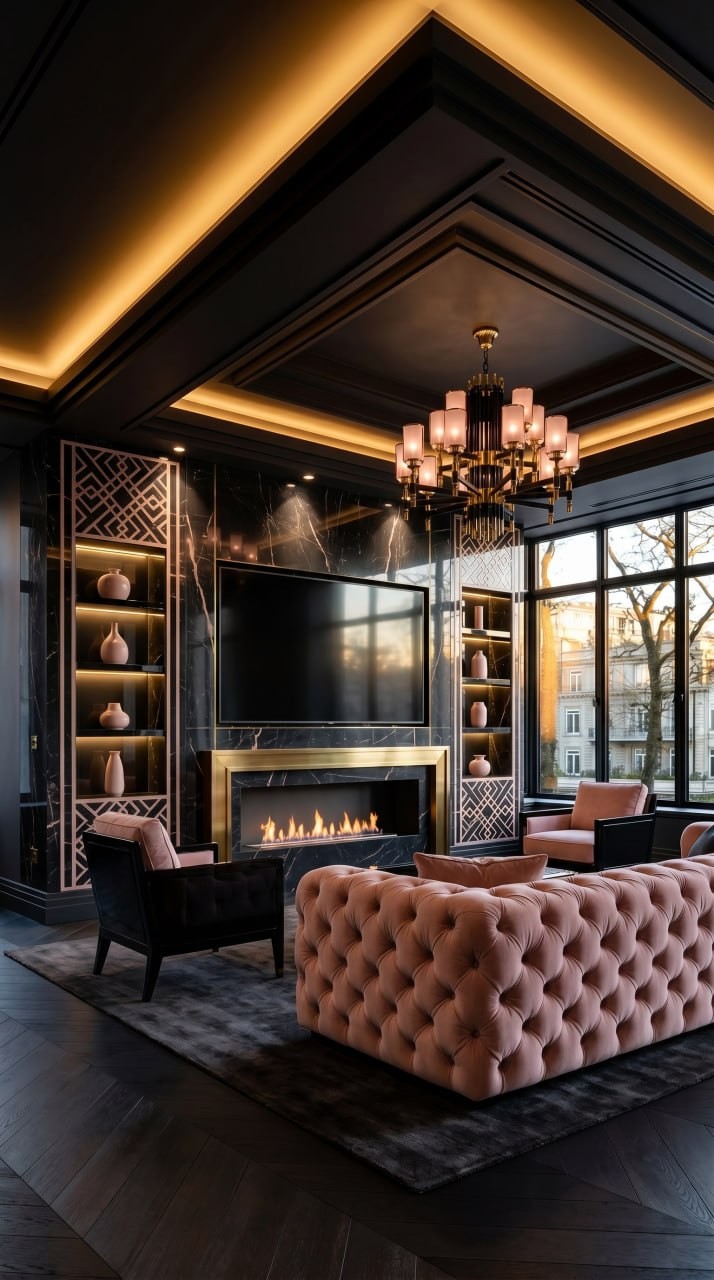
Black marble with gold veining is a night-time material — it comes alive under warm lamps and candlelight. Combined with blush velvet and a statement chandelier, this TV wall is built for rooms that host in the evening rather than sunbathe at noon.
The contrast between the dark wall and soft pink upholstery is what makes it work. Keep metals warm: brass and gold, never chrome.
10. Icy Blue Modern — Cool and Calm
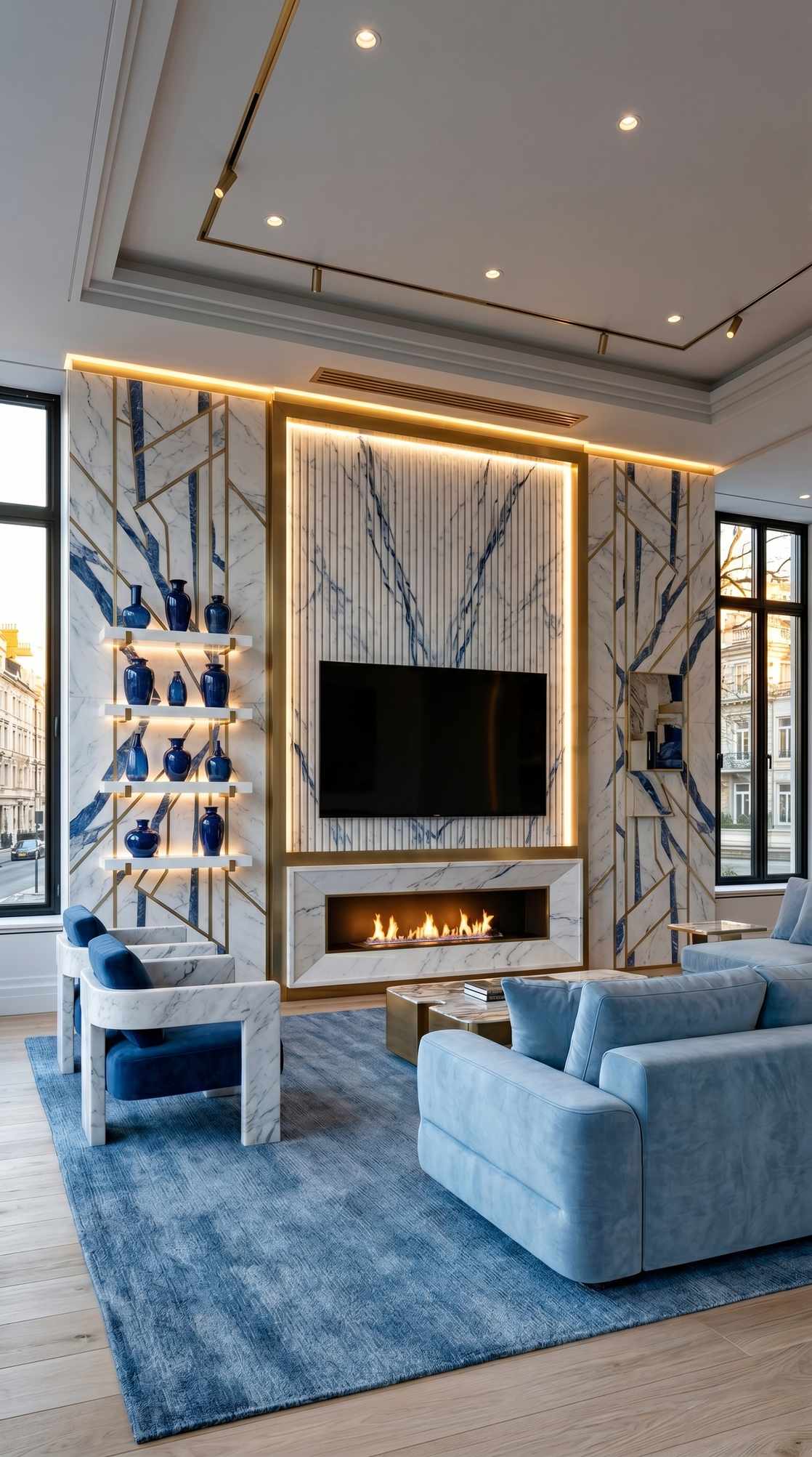
Cool palettes are harder to pull off on a TV wall, but blue-veined marble makes it feel fresh rather than cold. The fluted centre panel adds texture behind the screen, and pale blue upholstery keeps the room tonal from wall to sofa.
This style loves daylight. In a bright room it feels crisp and airy; in a dark room it can feel chilly, so add warm metallics and warm-white lighting.
11. Mustard Classic — Retro Geometric
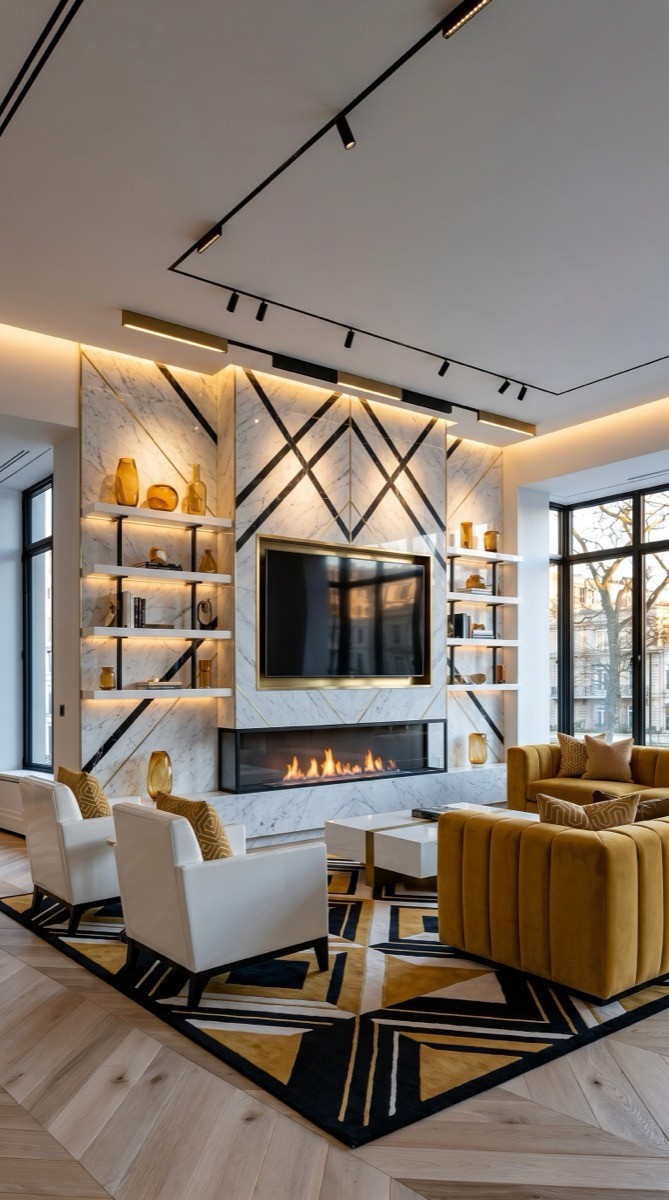
Mustard brings instant warmth and a hit of seventies confidence. Here it's balanced by a white marble wall with sharp black geometric inlay — pattern and colour in equilibrium, with the TV sitting calmly at the centre.
Geometric inlay is a commitment, so preview it first (this is exactly where AI earns its keep). If the full pattern feels strong, the same look works with the geometry confined to the fire surround.
12. Hollywood Glam — Maximum Drama
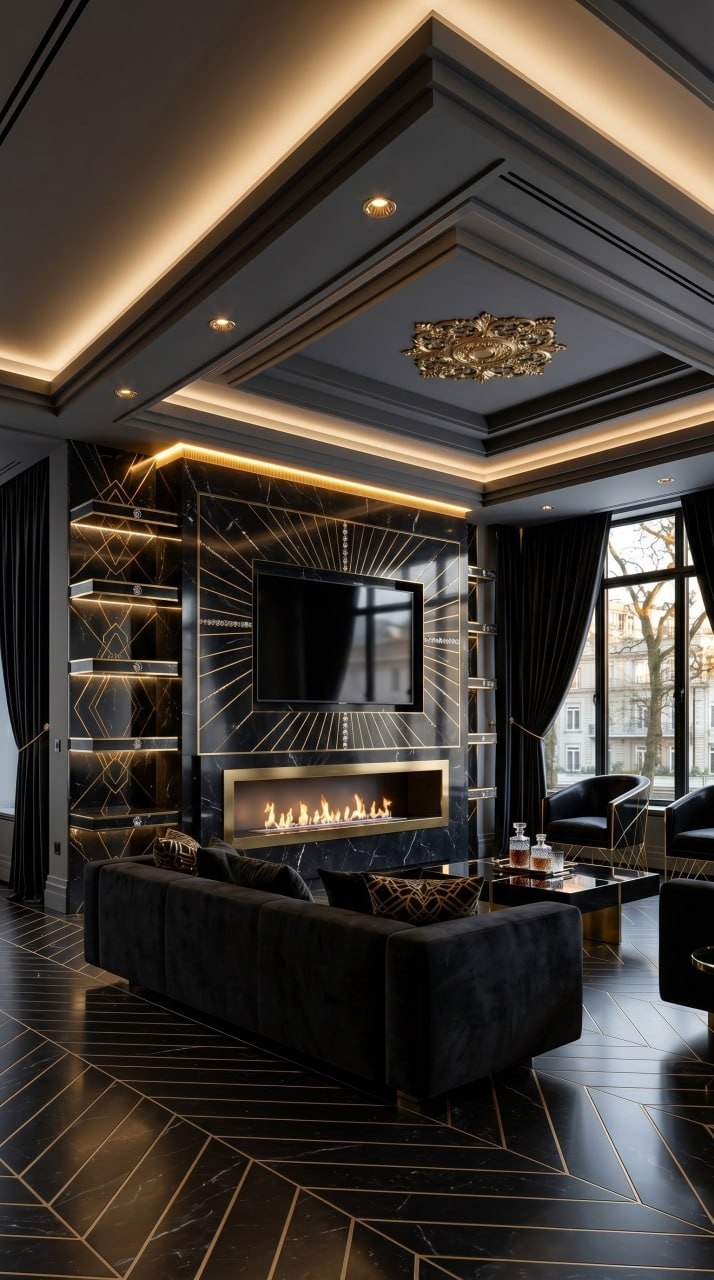
The finale: full Hollywood glamour. Black marble, gold sunburst detailing, velvet, glass and a chandelier that means business. The TV disappears into the composition — which is precisely the point of a wall like this.
This is a big-room look. In a compact living room, borrow the elements instead: a black marble fire surround or gold-framed TV recess, without the full deco ceiling.
TV Wall vs Media Wall — What's the Difference?
The terms get used interchangeably, but there's a useful distinction. A TV wall is any designed backdrop for your television — panelling, stone, shelving, paint, or a simple framed recess. A media wall is the full architectural build: a stud-wall construction that typically recesses the TV, integrates a fire, and adds built-in shelving, lighting and storage.
Every design in this post could be built either way — as a surface treatment on your existing wall, or as a full media wall project. If you're planning the architectural version, start with our AI media wall design ideas and how to design a media wall from a photo guides, then use these styles as your brief.
Getting the Basics Right: Size, Height and Light
TV size vs wall: as a rule of thumb, the TV should span roughly two-thirds of the panel or shelving zone it sits within — not edge to edge. On a 3-metre feature wall, a 65–75 inch screen usually balances best.
Mounting height: centre of screen at seated eye level, roughly 100–110cm from the floor. If a fire sits below, keep at least 20–30cm between the top of the fire opening and the bottom of the TV, and check your fire manufacturer's heat clearance.
Cables: plan them before the wall goes up. A recessed channel or in-wall trunking is the difference between a clean install and a beautiful wall with a black cable waterfall.
Lighting: warm LED (2700–3000K) in niches and behind panels. Backlighting the TV itself reduces eye strain and makes the wall feel finished at night.
Preview Any of These on Your Own Wall
Every design above was generated by AI from a room photo — and you can do the same with yours. Upload a picture of your living room to Aspire Interiors, choose a style (or upload an inspiration image), and see the design on your actual wall, with your proportions and your light. Then refine it with natural-language edits until it matches what you'd hand to a joiner.
You get 2 free designs when you sign up, so you can test two different TV wall styles tonight.
Design your TV wall from a photo →Frequently Asked Questions
What is a TV wall design?
A TV wall design is a deliberate backdrop for your television — panelling, stone, shelving, lighting or a framed recess — so the screen feels integrated into the room rather than stuck on a blank wall. It ranges from a simple panelled section to a full architectural build.
Is a TV wall the same as a media wall?
Not quite. A TV wall is any designed backdrop for the TV; a media wall is a specific stud-wall construction that recesses the TV and usually integrates a fire, shelving and lighting. Every TV wall style can be adapted into a media wall build.
How much does a TV wall cost in the UK?
A simple panelled TV wall with a mounted screen typically starts around £800–£1,500 in materials and joinery. Full media wall builds with fire, shelving and lighting commonly run £2,500–£6,000+ depending on size and finishes. An AI design preview helps you commit to a style before spending anything.
Can I design a TV wall with AI from a photo?
Yes. Upload a photo of your living room to Aspire Interiors, pick a style, and the AI generates the design on your actual wall — your proportions, windows and light. You can then edit details with natural-language prompts before taking it to a joiner.
What is the best material for a TV wall?
Fluted wood panelling is the most popular for warmth and texture; marble and travertine for luxury; glossy flat panels for minimal rooms. The best choice depends on your light, room size and the style of the rest of the room — preview two or three options before committing.
How high should a TV be mounted on a feature wall?
Centre of the screen at seated eye level — around 100–110cm from the floor for most sofas. If a fire sits below, leave 20–30cm minimum between fire and TV, and follow the fire manufacturer's clearance guidance.
Do TV walls work in small living rooms?
Yes — with adjustments. Choose light finishes (pale fluting, travertine, soft gloss), keep shelving shallow, and size the TV to about two-thirds of the panel width. See our media wall ideas for small living rooms for compact-specific designs.
Should a TV wall have a fire?
It's the most popular pairing in UK living rooms — a linear electric fire under the TV anchors the wall and adds warmth. But it's optional; several styles in this post work beautifully with shelving or a clean panelled finish instead.
How do I hide TV cables on a feature wall?
Plan cable routes before construction: in-wall trunking or a recessed channel behind the TV position, with sockets on the same circuit zone. Retrofit fixes exist (surface trunking painted to match), but in-wall is always cleaner.
Can AI design a media wall as well as a TV wall?
Yes — Aspire Interiors has a dedicated media wall workflow alongside full-room design. Upload your photo, choose media wall, and generate concepts with fire, shelving and lighting included. See how to design a media wall from any photo.
Your Wall, Your Rules
A TV wall is the one feature almost every British living room can justify — the screen is already there, so you may as well give it a backdrop that earns its place. Whether you lean towards dark walnut drama or a bright living wall, the smart move is to see it on your own wall before a single panel is cut.
Start your free TV wall design → — or browse the full architectural versions on our media walls page.
Related Reading
AI Media Wall Design Ideas: 12 Styles
The full architectural treatment — fire, joinery and lighting included.
AI Wall Design Ideas: Feature Walls
Feature walls for every room, including bedrooms and dining rooms.
How to Design a Media Wall from a Photo
Step-by-step tutorial with real app screenshots.
Media Wall Ideas for Small Living Rooms
Compact-specific designs that make small rooms feel bigger.
12 Luxury Media Wall Ideas That Look Five Times Their Budget
Fire, lighting and storage ideas that look five times their budget.
How to Design Your Room with AI
The flagship step-by-step room design guide.
By Mark Lunnemann — Founder, AutoMazen.ai, a London-based AI design tools company.