AI Wall Design Ideas (2026): Feature Walls for Every Room
26 July 2026 · 10 min read
One wall can change an entire room. A well-chosen feature wall adds depth, anchors your furniture, and gives the eye somewhere to land — without the cost or commitment of redesigning all four.
The tricky part has always been knowing which wall, which material, and how bold to go. That's where AI wall design earns its place: upload a photo of your room and preview feature walls on your actual wall — your light, your proportions — before a single panel is ordered. Below are 10 AI-designed feature wall ideas across living rooms, dining rooms and bedrooms, all generated with Aspire Interiors, plus the practical rules that make feature walls work.
If your feature wall involves a TV, head to our AI TV wall design ideas — this post is about everything else.
↓Start your AI wall designJump to a wall
1. Floor-to-Ceiling Fluted Walnut
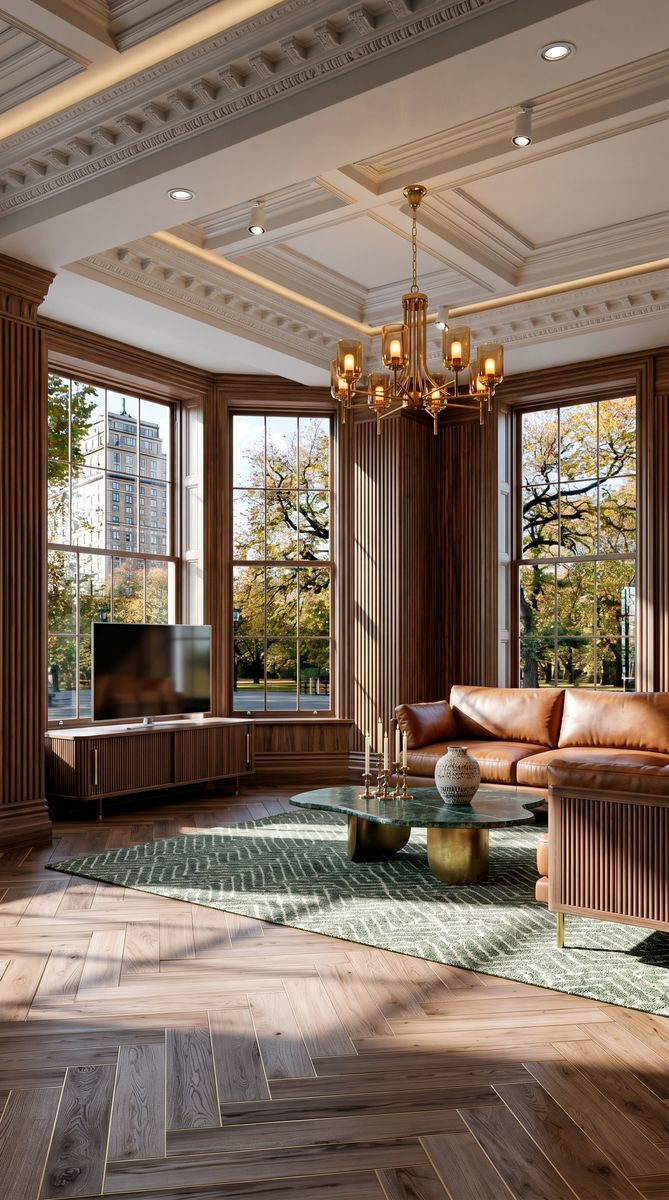
Fluted walnut between tall windows turns an ordinary wall into architecture. The vertical lines exaggerate ceiling height, the timber adds warmth you can't get from paint, and it pairs with almost everything — leather, wool, brass, stone.
Full-height panelling is a commitment, so this is exactly the kind of wall to preview first. In smaller rooms, run the fluting on one wall only and keep the rest light.
2. Panelled Colour Drench
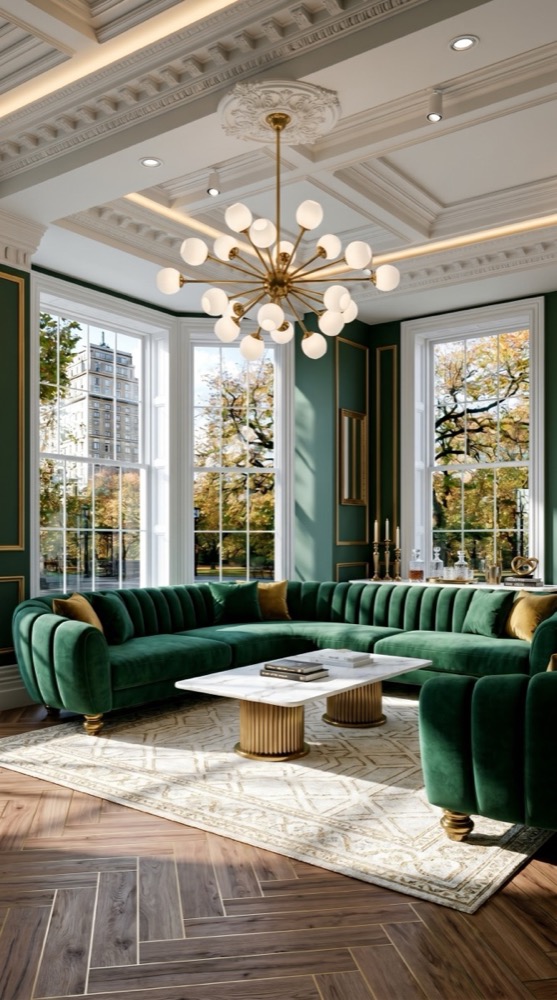
Traditional panelling painted in a single deep colour — here, a rich forest green — gives you period character and modern confidence at once. Taking the colour across skirting, panel moulds and even the ceiling coving ("colour drenching") makes the room feel wrapped rather than decorated.
This is the most budget-friendly feature wall on the list: mouldings plus paint. The impact-per-pound is unbeatable.
3. Bookmatched Onyx Statement Wall
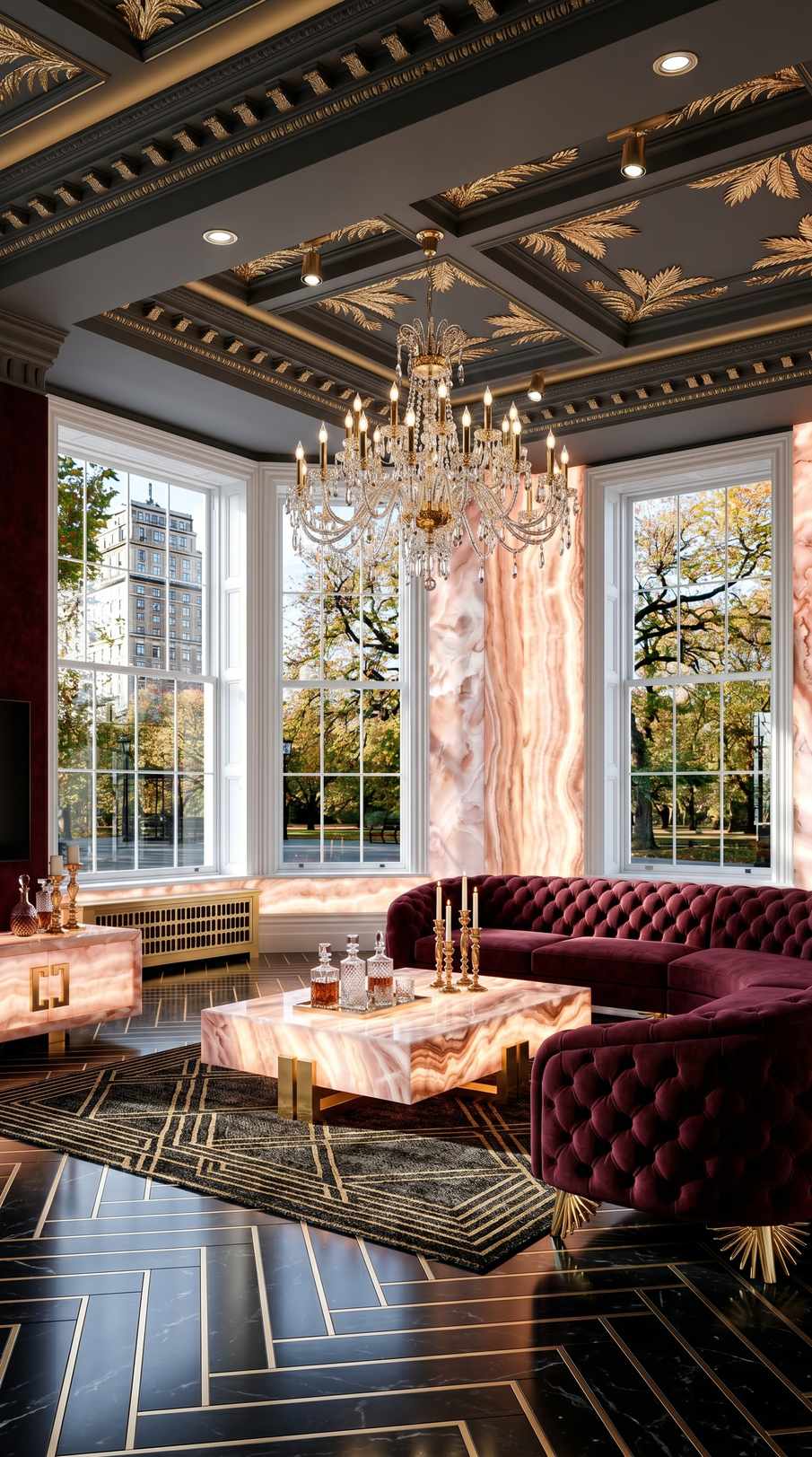
Bookmatched stone — where two slabs are mirrored like an open book — is the pinnacle of statement walls. This pink onyx installation runs between the windows and continues onto the console and coffee table, so the room feels carved from one material.
Real bookmatched onyx is a serious investment; porcelain lookalikes deliver 90% of the effect at a fraction of the cost. Either way, preview the veining pattern first — it's the one detail you can't change after installation.
4. Travertine Slab Walls
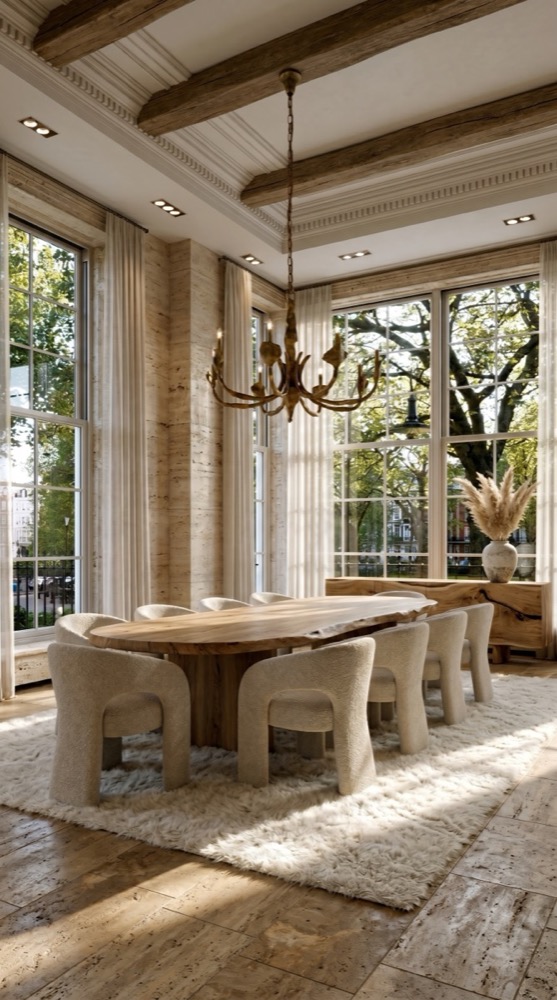
Travertine slabs bring a calm, gallery-like quality to dining rooms — warm stone without the formality of marble. Here it wraps the walls and columns, softened by raw timber beams and bouclé chairs.
Stone walls love texture: nubby fabrics, aged wood, linen. Keep the palette quiet and let the pitting and veining provide the interest.
5. Coastal Shiplap
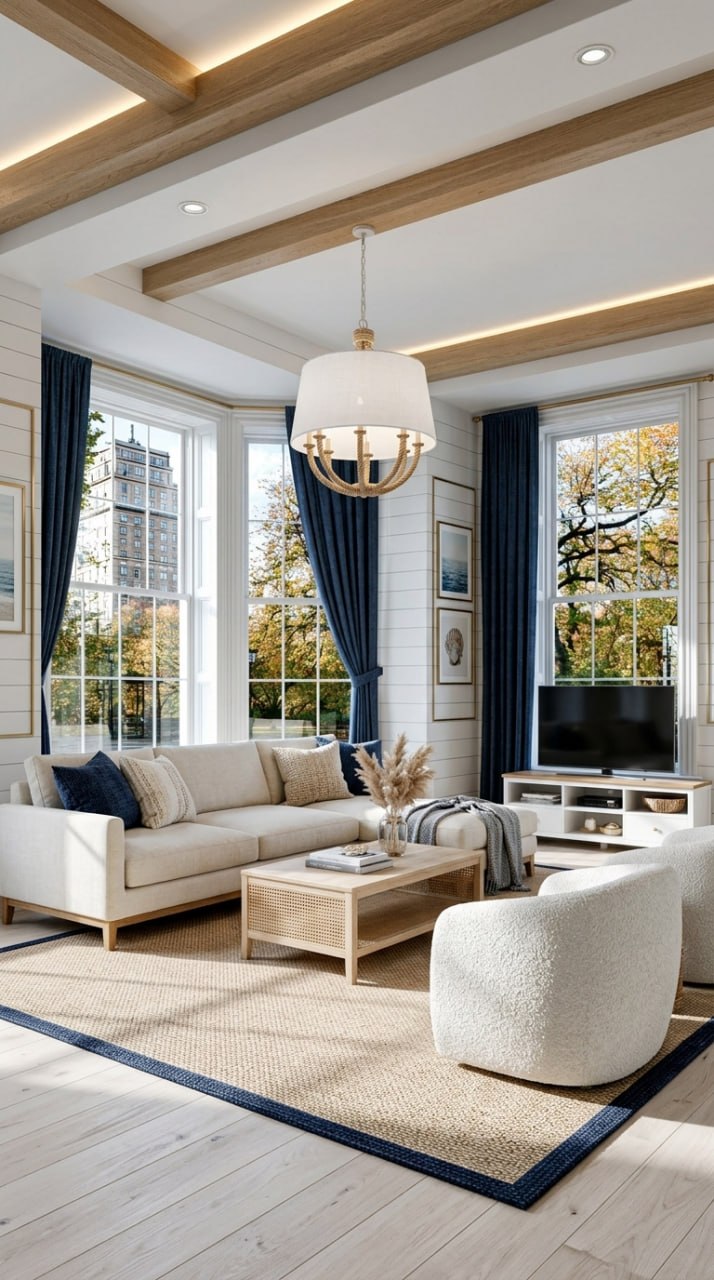
Horizontal shiplap (tongue-and-groove) panelling in soft white instantly brightens a room and adds rhythm without colour. It's the friendliest feature wall for renters and first-time DIYers — forgiving to install and easy to repaint.
Pair with natural textures — jute, rattan, washed linen — and one strong accent colour (navy here) to stop the white going clinical.
6. Sustainable Timber Panelling
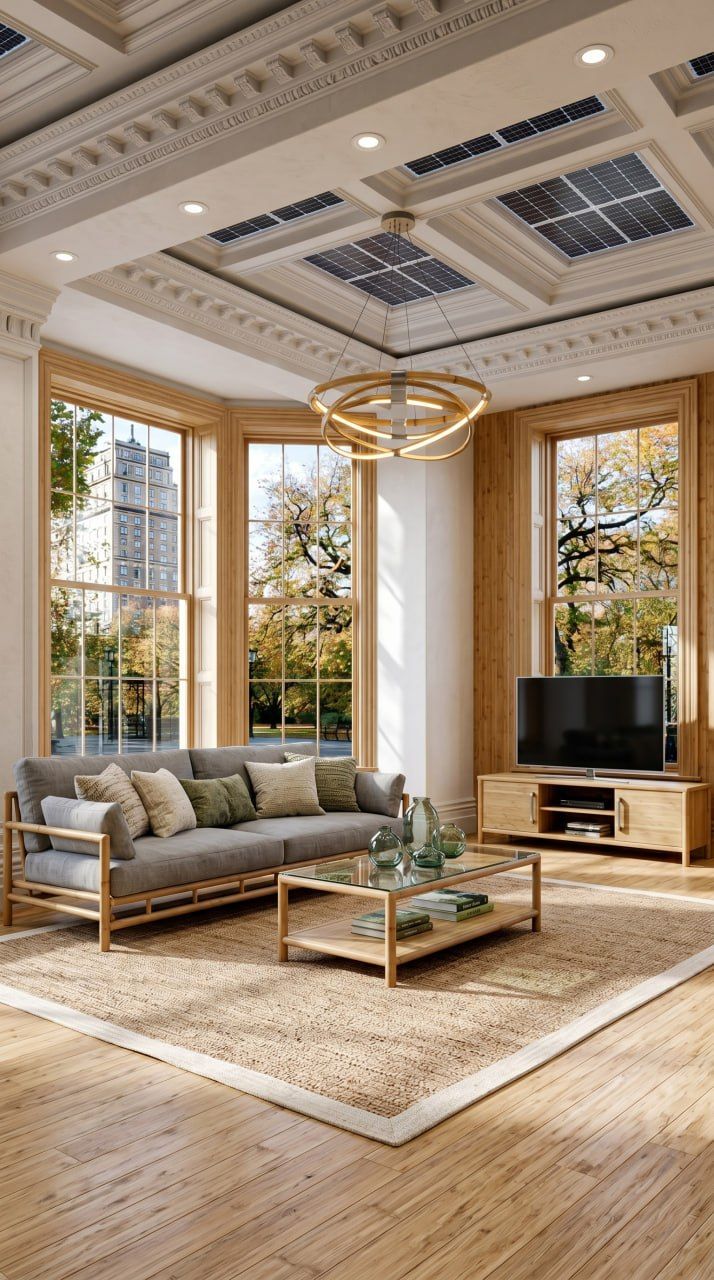
Light, responsibly sourced timber panelling is the quiet achiever of wall design — warm without darkness, textural without pattern. It works as well in new builds as in period rooms, and it ages gracefully.
Ask your joiner about FSC-certified oak or ash. A matte hardwax oil finish keeps the grain natural and protects against scuffs in family rooms.
7. Upholstered Bedroom Wall Panels
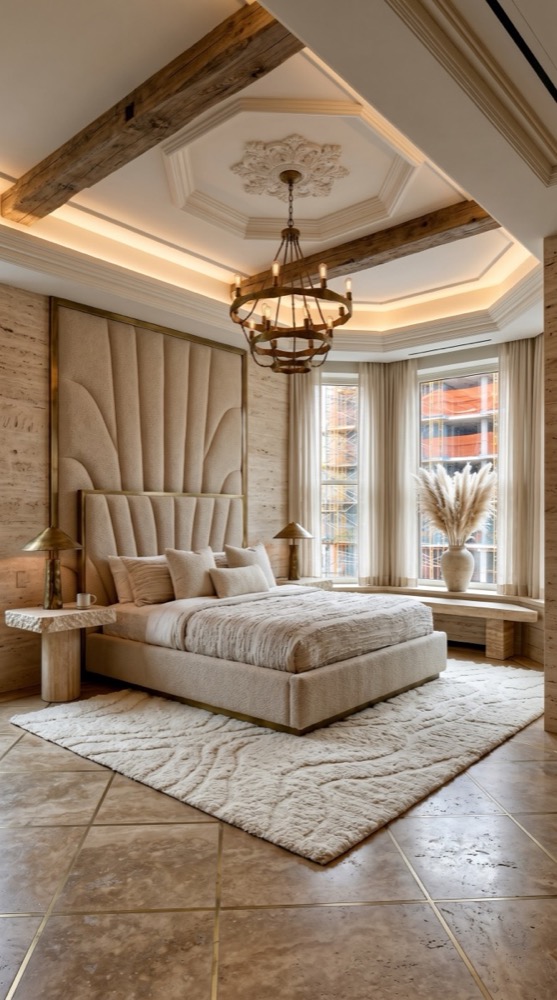
The most popular bedroom feature wall of 2026: tall upholstered panels rising behind the bed like an extended headboard. They add softness, absorb sound (genuinely useful in bedrooms), and look expensive in photographs.
Cream bouclé is the classic choice, but any textured fabric works. Panels are typically 40–60cm wide, mounted on battens — a competent DIY job or a one-day joiner task.
8. Marble and Timber Behind the Bed
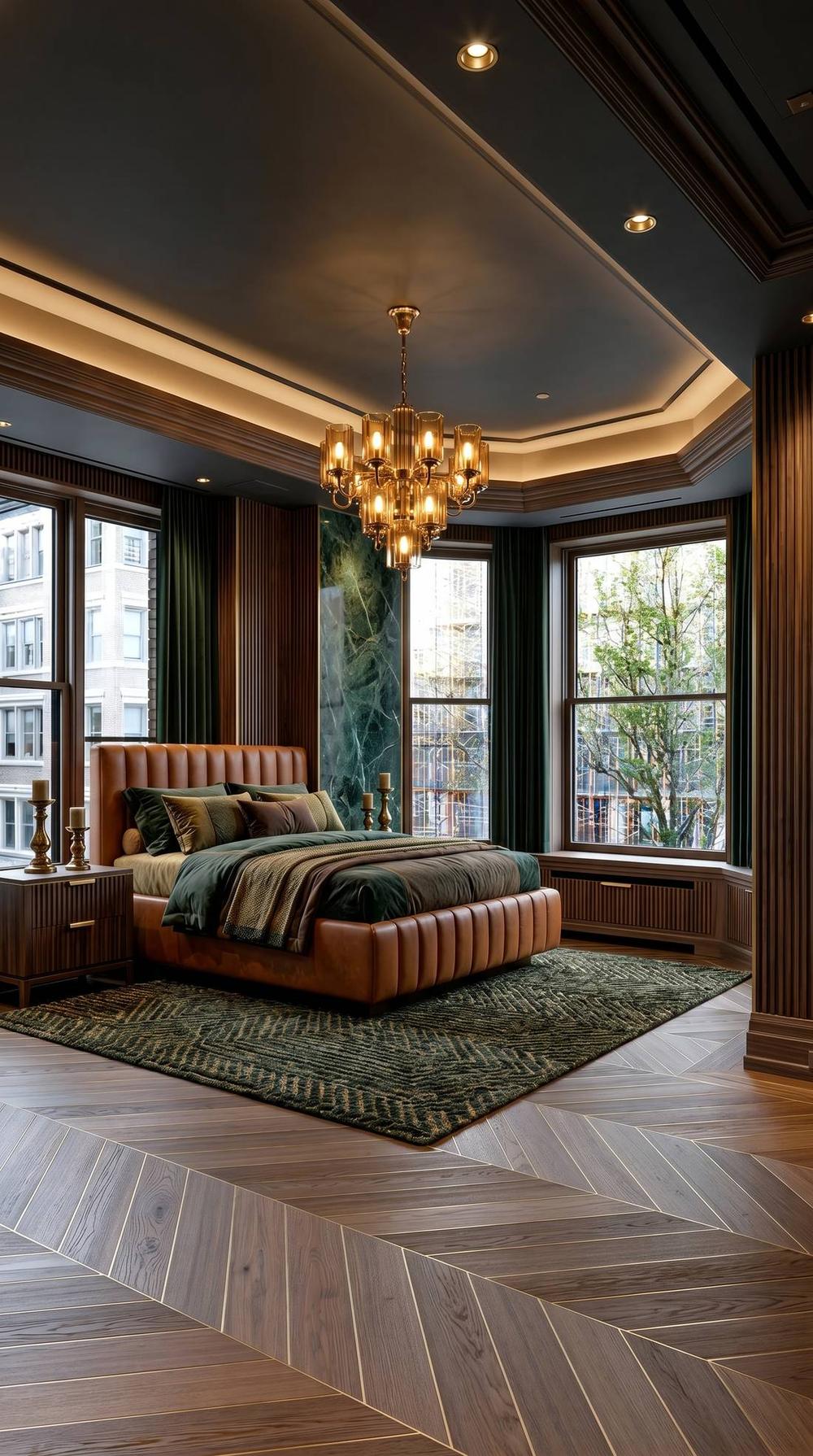
Why choose one material when two layers work harder? Here, fluted walnut frames a central green marble panel behind the bed — the stone provides the drama, the timber frames it like a picture.
This layered approach suits master bedrooms where you want genuine luxury. Keep bedding tonal so the wall stays the star.
9. Soft Blush Panels
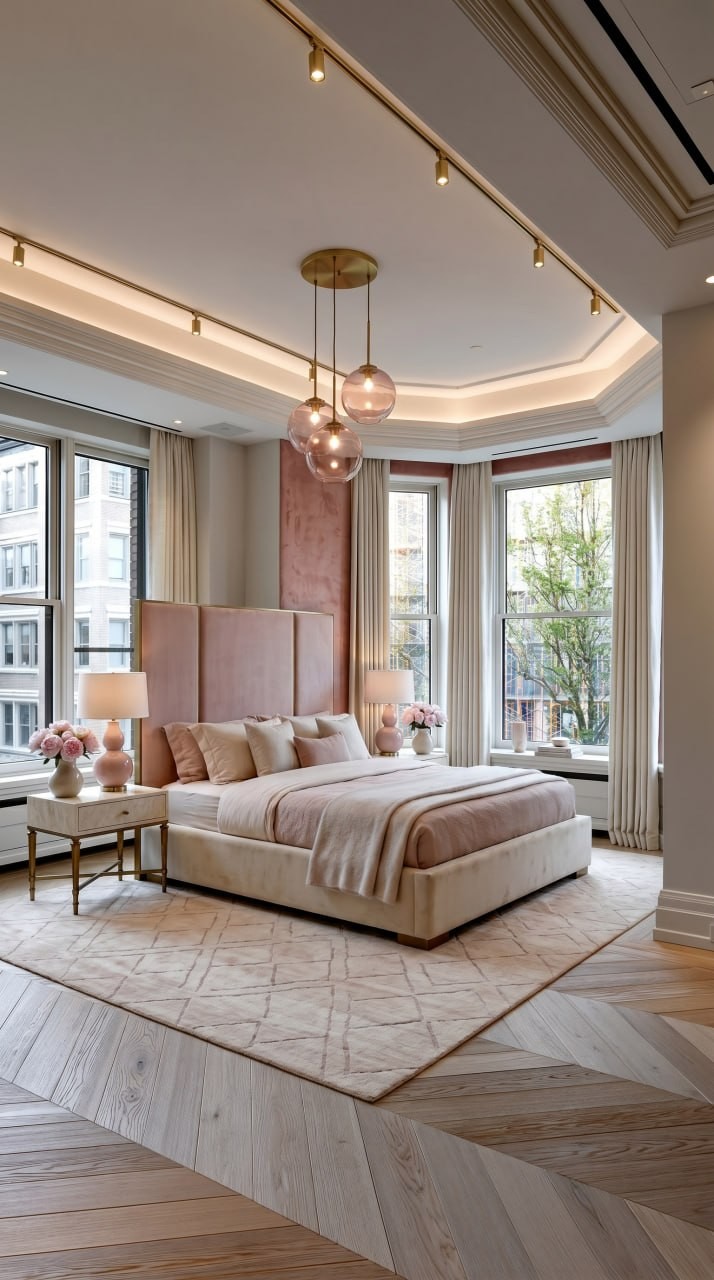
A single oversized velvet panel in soft blush turns the bed wall into something quietly glamorous — no pattern, no clutter, just colour and texture at scale. It's a particularly effective trick in rooms with bay windows, where the flat wall between bays can feel lost.
Blush works because it behaves like a neutral with warmth. Pair with cream, brass and pale timber.
10. Colour Block Plus Fluted Screen
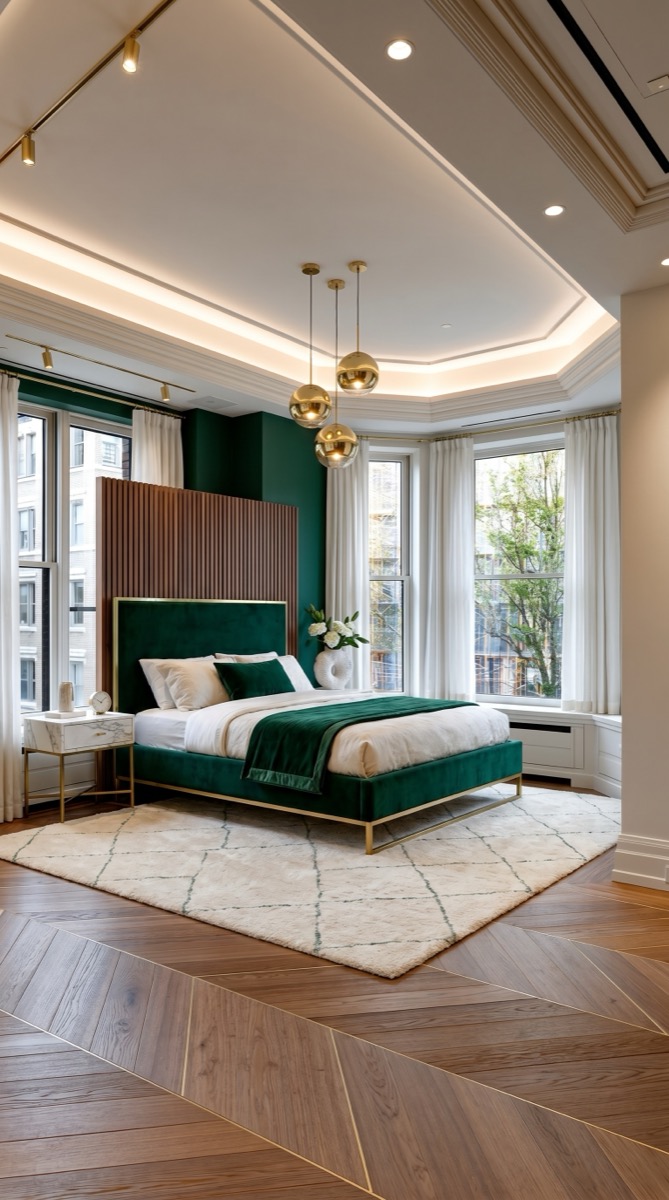
The most flexible option on the list: a bold painted colour block (deep green here) with a freestanding fluted screen layered in front of it. Paint first, live with it, then add the screen if the wall still feels flat — it's a feature wall you can build in stages.
This is also the easiest look to preview with AI: test three paint colours on your own wall in an evening and see which one your light loves.
The Rules That Make Feature Walls Work
Pick the right wall. The best candidate is usually the wall your eye hits first when entering, or the wall behind the room's anchor — the bed, the sofa, the dining table, the fireplace. Never feature a wall that's mostly doors and windows; the interruptions kill the effect.
One wall, one job. A feature wall works because the other walls stay quiet. Two competing feature walls in one room is an argument, not a design.
Light it deliberately. A feature wall without lighting is half-finished. Wall washers, picture lights, or LED strips behind panels transform the wall at night — warm white (2700–3000K) almost always beats cool white.
Texture beats pattern for longevity. Bold wallpaper dates fast; timber, stone and upholstered panels age gracefully. If you love pattern, keep it to art and cushions.
When a wall needs to do more. If your feature wall also needs to house a TV, fire or serious storage, you're in media wall territory — see our AI media wall design ideas and TV wall ideas for those.
Preview It on Your Wall First
Every wall in this post was generated by AI from a photo — and the same process works on your rooms. Upload a picture to Aspire Interiors, choose a style (or upload an inspiration image), and see the feature wall on your wall before you commit. Refine it with natural-language edits until it's right, then hand the design to your joiner as the brief.
You get 2 free designs when you sign up — enough to test two walls, or two styles on the same wall.
Design your feature wall from a photo →Frequently Asked Questions
What is a feature wall?
A feature wall (or accent wall) is a single wall finished differently from the rest of the room — with panelling, stone, bold colour, wallpaper or texture — to create a focal point. Done well, it anchors the room's layout and adds depth without redesigning the whole space.
Which wall should I choose as the feature wall?
Usually the wall you see first when entering the room, or the wall behind the main furniture: the bed in a bedroom, the sofa in a living room, the table in a dining room. Avoid walls broken up by multiple doors and windows — the interruptions weaken the effect.
Are feature walls still in style in 2026?
Yes — but the materials have moved on. Painted accent walls in a contrasting flat colour have given way to texture-led designs: fluted timber panels, stone and travertine, upholstered panels, and colour drenching across mouldings. The feature wall isn't dead; it just grew up.
What is the best feature wall for a bedroom?
Behind the bed, almost always. Tall upholstered panels are the current favourite — soft, sound-absorbing and luxurious — followed by painted colour blocks and timber panelling. Keep the other walls calm and the bedding tonal so the wall does the work.
Can AI design a feature wall from a photo of my room?
Yes. Upload a photo to Aspire Interiors, choose a style (or upload inspiration), and the AI generates the feature wall on your actual wall — your proportions, windows and light. You can edit details with natural-language prompts, then use the result as your joiner's brief.
What materials work best for feature walls?
Timber panelling (fluted or flat) for warmth, stone and porcelain slabs for luxury, upholstered panels for bedrooms, painted mouldings for budget impact. Living green walls and preserved moss panels are rising fast for biophilic schemes.
Do feature walls work in small rooms?
Yes — a feature wall can actually make a small room feel bigger by adding depth. Choose light finishes (pale timber, soft colour, slim panels), keep the treatment on one wall, and use lighting to wash the surface at night.
How much does a feature wall cost in the UK?
Painted panelling: roughly £150–£400 in materials. Timber or fluted panel walls: £500–£1,500 depending on size and timber. Upholstered panels: £300–£800. Stone or porcelain slabs: £1,000–£3,000+. An AI preview costs nothing and stops expensive mistakes.
What's the difference between a feature wall and a media wall?
A feature wall is purely decorative. A media wall is an architectural build — a stud wall that recesses a TV and usually integrates a fire, shelving and lighting. A media wall is a kind of feature wall, but with engineering inside. See what the full build looks like on our media walls page.
Can a feature wall add value to my home?
Tasteful, well-built feature walls (timber panelling, stone, quality joinery) photograph beautifully and can help a property stand out in listings. Personal taste varies, so keep bold choices to easily reversible finishes if you're selling soon.
One Wall Is All It Takes
You don't need a full renovation to change how a room feels — you need one wall, the right material, and the confidence to commit. Preview the idea on your own wall first, and the commitment gets much easier.
Start your free feature wall design → — or explore bedroom design ideas and living room design ideas for full-room inspiration.
Related Reading
AI TV Wall Design Ideas: 12 Styles
Designed backdrops for your television, from walnut to living green walls.
AI Media Wall Design Ideas: 12 Styles
The full architectural build — fire, joinery and lighting included.
AI Bedroom Design Ideas
Full-room inspiration for bedrooms in 12 styles.
AI Living Room Design Ideas
Full-room inspiration for living rooms in 12 styles.
AI Interior Design: The Complete Guide
How the technology works, what it costs, and how to get results worth building.
How to Design Your Room with AI
The flagship step-by-step room design guide.
By Mark Lunnemann — Founder, AutoMazen.ai, a London-based AI design tools company.